
Are There Really Bodies Found in Petra's Treasury?
Type "Petra Treasury" into a search bar for long enough and this question comes up. The short answer is yes, and the real story is better documented and stranger than most of what circulates online: a sealed tomb, twelve untouched skeletons, and a ceramic cup found still in someone's hands.
Booking Choice: Private Petra Main Trail takes 2–3 hours, starting in Petra / Wadi Musa. Explore This Option
General starting recommendation. Petra admission, hotel drop-off and Monastery hike excluded. About 6 km of walking; moderate fitness.
We may earn a commission when you book through these links.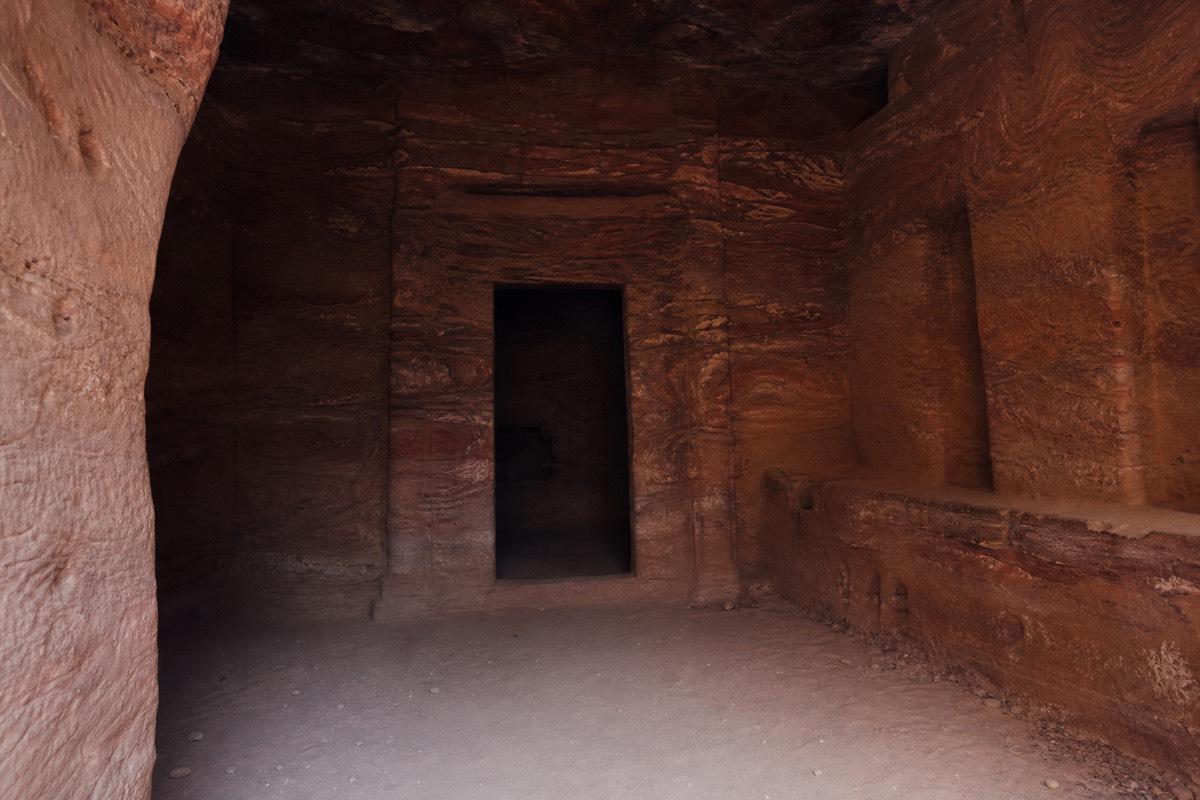
In October 2024, a research team announced they had opened a sealed tomb beneath the forecourt of Petra's Treasury and found twelve complete human skeletons, buried there for roughly two thousand years and never disturbed. It made international news, partly because of the find itself and partly because of an odd real-world echo of the Treasury's fictional fame. Here is what was actually found, how it was found, and what it means for anyone visiting the site today.
So did they really find bodies in the Treasury?
Yes. In October 2024, the American Center of Research (ACOR) and the University of St Andrews announced they had located and opened a sealed tomb beneath the Treasury's forecourt at Petra, finding twelve complete human skeletons that had lain undisturbed since they were buried roughly two thousand years ago.
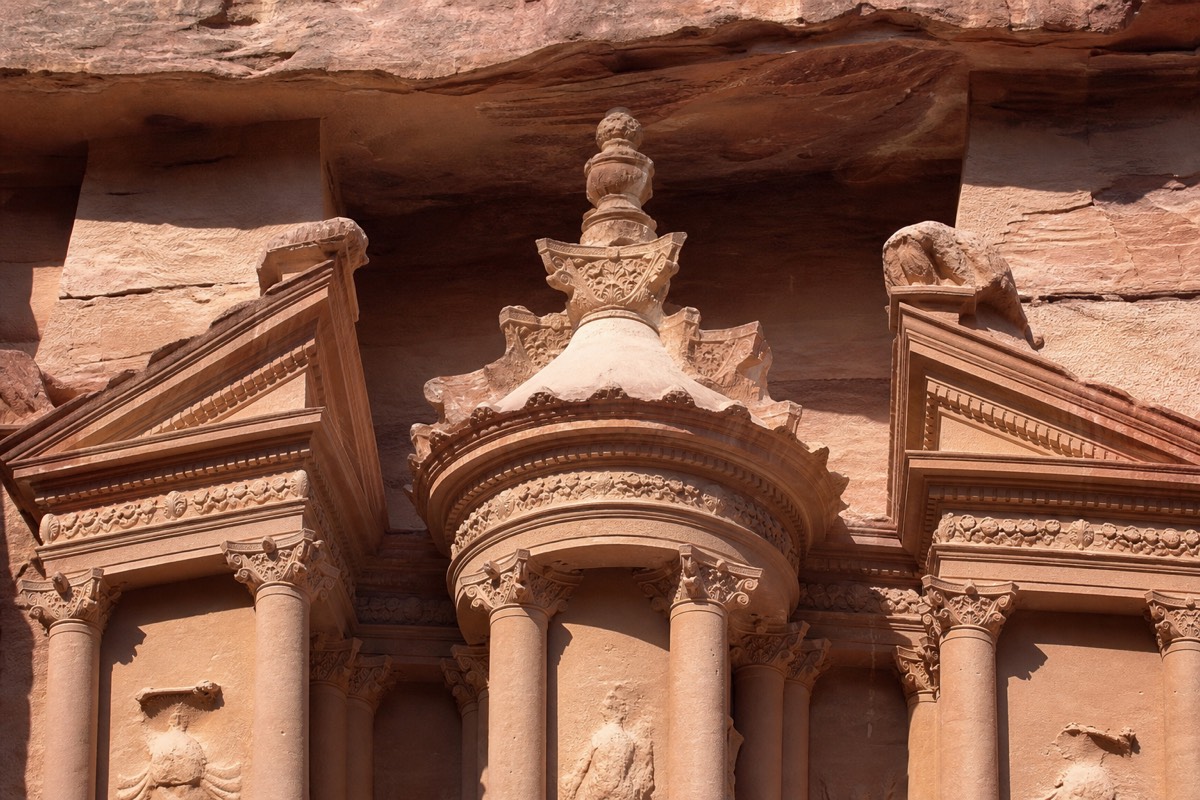
That distinction matters. The Treasury (Al-Khazneh) itself was carved by the Nabataeans as a monumental tomb facade, and most of its visible interior chambers were emptied out centuries ago by looters, erosion or simple curiosity. A fully sealed burial chamber that nobody had reached first is genuinely rare at a site this famous. Researchers involved in the dig described it as one of the most significant single-tomb discoveries at Petra in decades, and very few complete early Nabataean burials had ever been recovered from the site before this one. The NPR coverage of the discovery and the University of St Andrews' own account of the dig both cover the find in detail.
How do you find a tomb nobody can see?
The team never started by digging. Geophysicist Richard Bates led a non-invasive survey of the plaza in front of the Treasury using three methods together, ground-penetrating radar, electrical resistivity imaging and magnetometry, mapping voids and disturbed rock beneath the surface before a single shovel went in.
Each method reads the ground differently. Radar bounces electromagnetic waves off buried structures; resistivity measures how easily current passes through solid rock versus an empty chamber; magnetometry picks up small distortions in the local magnetic field caused by carved or filled-in spaces. Layering all three let the team confirm a real cavity under the plaza before committing to an excavation, which matters on a UNESCO World Heritage site where digging speculatively is not something you get to redo.
| The 2024 Treasury tomb | What's confirmed |
|---|---|
| Skeletons found | 12, complete and undisturbed |
| Estimated date | Roughly 1st century BC to early 2nd century AD |
| How it was located | Ground-penetrating radar, resistivity imaging, magnetometry |
| Announced | October 2024 |
| Led by | University of St Andrews, ACOR, Jordan's Department of Antiquities |
What was actually inside the tomb?
Twelve skeletons, deliberately interred rather than dumped, alongside pottery, bronze and iron objects. One individual was found still holding a ceramic cup, the kind of grave offering archaeologists associate with Nabataean burial ritual rather than anything more dramatic.
Sediment and material samples from the tomb's walls dated its construction to somewhere between the mid-1st century BC and the early 2nd century AD, which lines up with the height of the Nabataean kingdom that carved the wider city. There was no sign the chamber had been opened or looted before the 2024 team reached it, which is what makes the find useful beyond its novelty: it gives researchers an intact sample of how people were actually buried near the Treasury, not just what survived scavengers. Work on the tomb and its contents was still ongoing through 2025 and into 2026, including a 3D digital documentation project.
Is that the only body ever found near the Treasury?
No, and it would be strange if it were. The Treasury and the Siq that leads to it sit inside a city built, in large part, as a place for the dead: rock-cut tomb facades line the cliffs from the Street of Facades to the Royal Tombs, alongside temples, a theatre and a full residential city that archaeologists are still mapping. What made the 2024 discovery different was not that a tomb existed near the Treasury. Tombs are everywhere in Petra. It was that this particular one had never been opened, looted or picked over, which is close to unheard of after two centuries of excavation at the site.
Does this have anything to do with the Holy Grail?
Only by coincidence, and it is worth saying so plainly. The Treasury became globally famous as the fictional resting place of the Holy Grail in a 1989 film, and several outlets covering the real find pointed out that a skeleton found clutching a ceramic cup made for an eerie echo of that scene. The resemblance stops there: this was a documented excavation with sediment dating, geophysical surveys and a published research partnership, not a treasure hunt, and the cup itself is an ordinary Nabataean grave offering rather than a mythical relic. The genuine story, a sealed 2,000-year-old burial chamber quietly waiting under a plaza that millions of tourists have walked across, needs no embellishment.
Can you see the tomb if you visit Petra today?
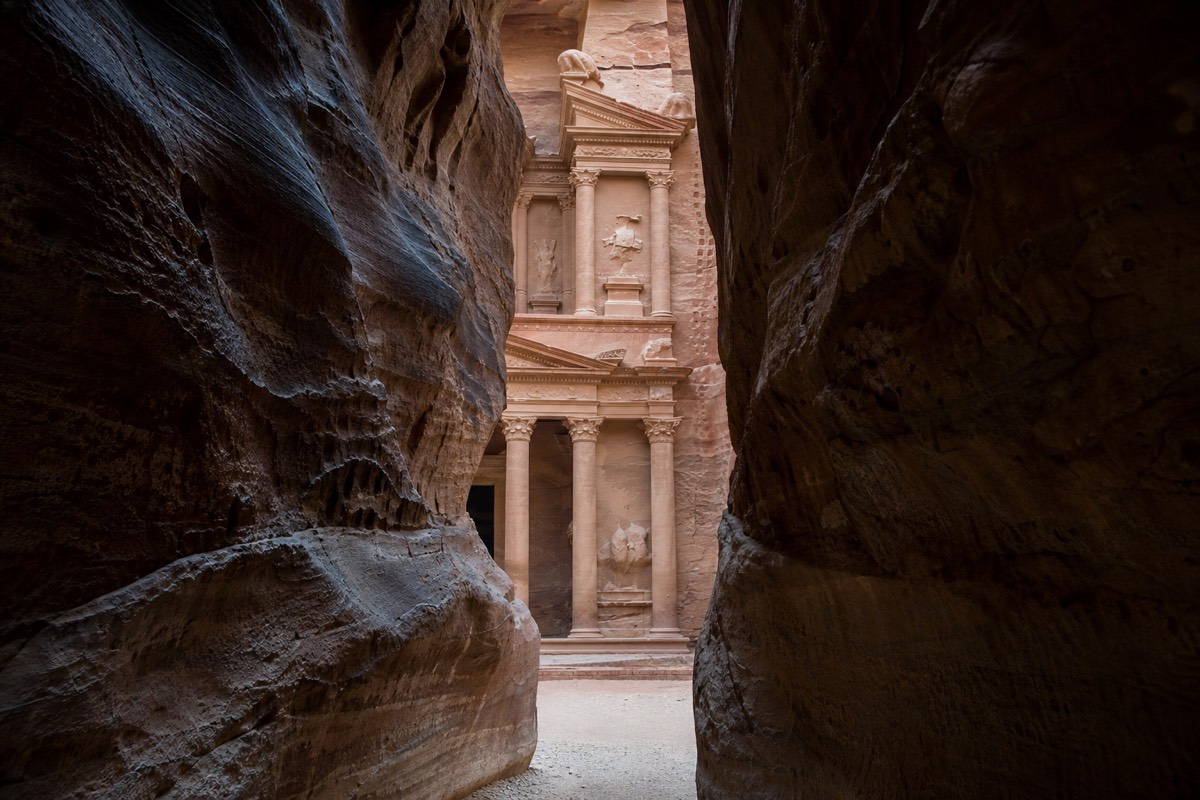
No. The chamber is not part of the public visitor route and remains an active research and conservation site rather than something open for viewing. What you will actually see on a guided visit is the Treasury's carved facade itself and the narrow gorge of the Siq that opens onto it, which is still the part of Petra that stops people in their tracks regardless of what has or hasn't been found underneath the plaza they're standing on.
The real story here is better than the myth: Petra keeps turning up genuine, carefully documented history almost every excavation season, and the Treasury alone has more layers than its famous facade suggests. Seeing that facade in person, walking the mile-long Siq that leads to it, is still the best way to understand why archaeologists keep digging here. The simplest way to do that without getting lost in permits or logistics is to let a guided trip handle it, and Petra Jordan Tours lines up the operators who run these routes daily, so you spend the morning looking at the cliffs instead of at a map.