
Can You Swim in the Dead Sea? (Floating vs Swimming, Explained)
People picture themselves swimming laps in the Dead Sea and are always surprised by what actually happens the moment they step in. Here is the real mechanism behind the float, what it feels like, and the safety rules that matter more than the novelty.
Booking Choice: Private Dead Sea Half-Day Trip takes 5 hours, starting in Amman. Explore This Option
General starting recommendation. Choose the hotel-entry option for beach/pool facilities; lunch and spa treatments depend on option or cost extra.
We may earn a commission when you book through these links.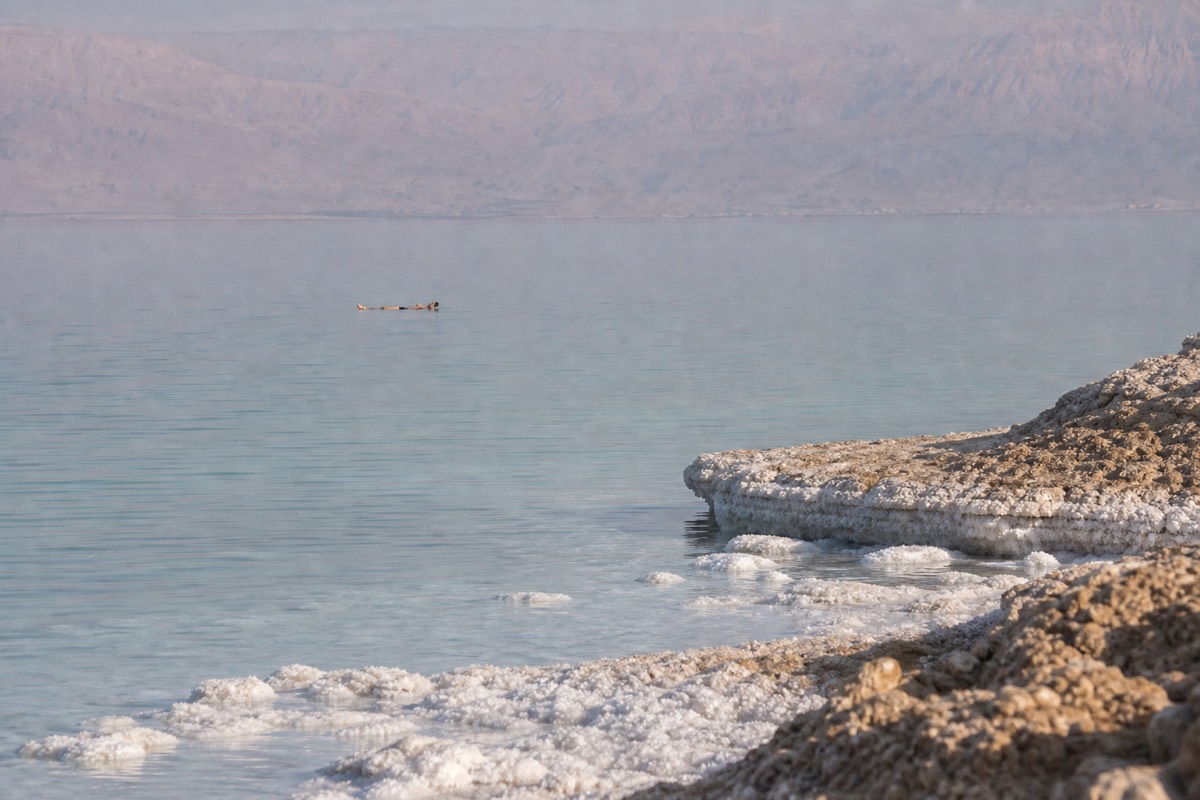
The first thing almost everyone does at the Dead Sea is try to swim normally, and the first thing almost everyone learns is that it does not work the way they expect. The water pushes back too hard. Here is why, what it actually feels like, and the handful of safety rules worth knowing before you step in.
Can you actually swim in the Dead Sea?
Not in the way you swim anywhere else. The Dead Sea's water is roughly 34 percent salt, about nine to ten times saltier than the ocean, dense enough that your body floats high on the surface whether you try to or not. Regular swimming strokes barely work, because your legs and lower body pop upward, and almost everyone ends up floating on their back instead.
Buoyancy helps people float, but it does not establish that a child or non-swimmer can enter safely. Children need close adult supervision and non-swimmers need assistance. Keep the face clear of the water and follow the lifeguard’s instructions.
Why does the salt make you float like that?
The Dead Sea's extreme salt content pushes its water density to around 1.24 grams per cubic centimetre, well above the roughly 1.0 grams per cubic centimetre of an average human body. By Archimedes' principle, a body floats when it displaces a weight of fluid equal to its own weight, and Dead Sea brine is dense enough to do that with much of you still above the surface.
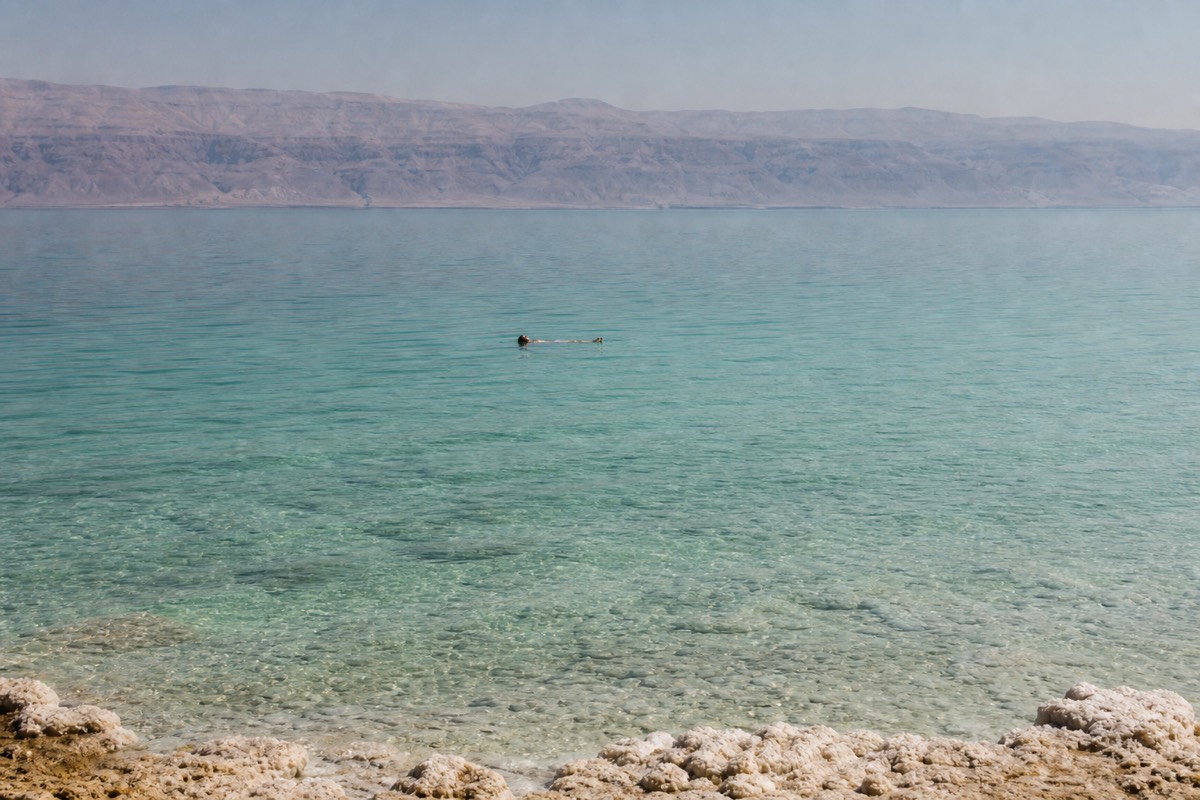
Ordinary seawater, at roughly 3.5 percent salinity, is close enough in density to the human body that swimming feels normal: you have to actively work to stay at the surface. Dead Sea brine is different by a wide enough margin that staying at the surface takes no effort at all, and standing upright in it is oddly hard, since your own buoyancy keeps tipping your legs back up. Britannica's entry on the Dead Sea covers the salinity and density figures in more depth.
| Dead Sea | Typical ocean water | |
|---|---|---|
| Salinity | About 34% | About 3.5% |
| Approx. density | About 1.24 g/cm³ | About 1.03 g/cm³ |
| Effort to float | Effectively none | Requires active swimming |
| Can you sink? | The salty water makes floating easier, but it does not prevent drowning. Keep your face out of the water, do not dive or swim face-down, and use supervised, maintained access. | Yes, without effort to stay up |
What does floating there actually feel like?
Visitors consistently describe the same handful of sensations. Your legs and hips ride noticeably higher than in a pool or the ocean, so lying flat on your back with your feet up is the natural position, not something you have to work at. Trying to stand and walk feels clumsy, since the same buoyancy that makes floating effortless makes planting your feet on the bottom oddly hard. The water itself feels thick and oily against the skin, thanks to the dissolved minerals, and it leaves a fine white residue as it dries. Most people describe the whole thing as closer to lying on a warm waterbed than swimming.

Buoyancy helps people float, but it does not establish that a child or non-swimmer can enter safely. Children need close adult supervision and non-swimmers need assistance. Keep the face clear of the water and follow the lifeguard’s instructions.
Is it actually safe to get in?
Yes, for almost everyone, provided you follow a short list of real rules: avoid shaving for a day or two beforehand, keep the water away from your eyes and mouth, limit a single float to around 15 to 20 minutes, and rinse off with fresh water immediately after at the beach's showers.
Each rule addresses a specific, real risk rather than being generic caution. Freshly shaved or broken skin stings badly in 34 percent brine. Splashed eyes burn intensely and need a fresh-water rinse right away, so float on your back with your hands above the surface and avoid diving or rough play. Swallowing the water is genuinely unpleasant and can irritate the throat, which is another reason normal front-crawl swimming is discouraged. And because the salt and minerals sit on your skin as the water evaporates, a fresh-water rinse afterward is standard practice at every Dead Sea beach and resort, not an optional extra.
Where in Jordan can you actually do this?
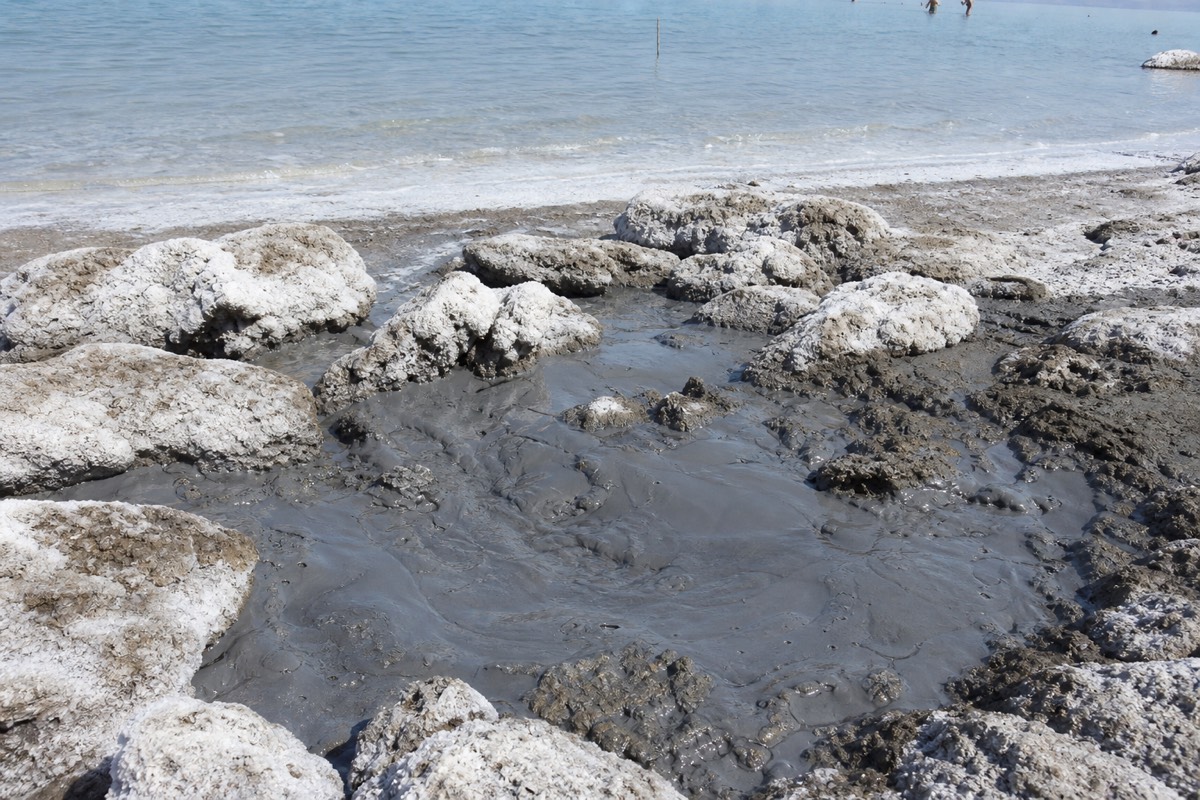
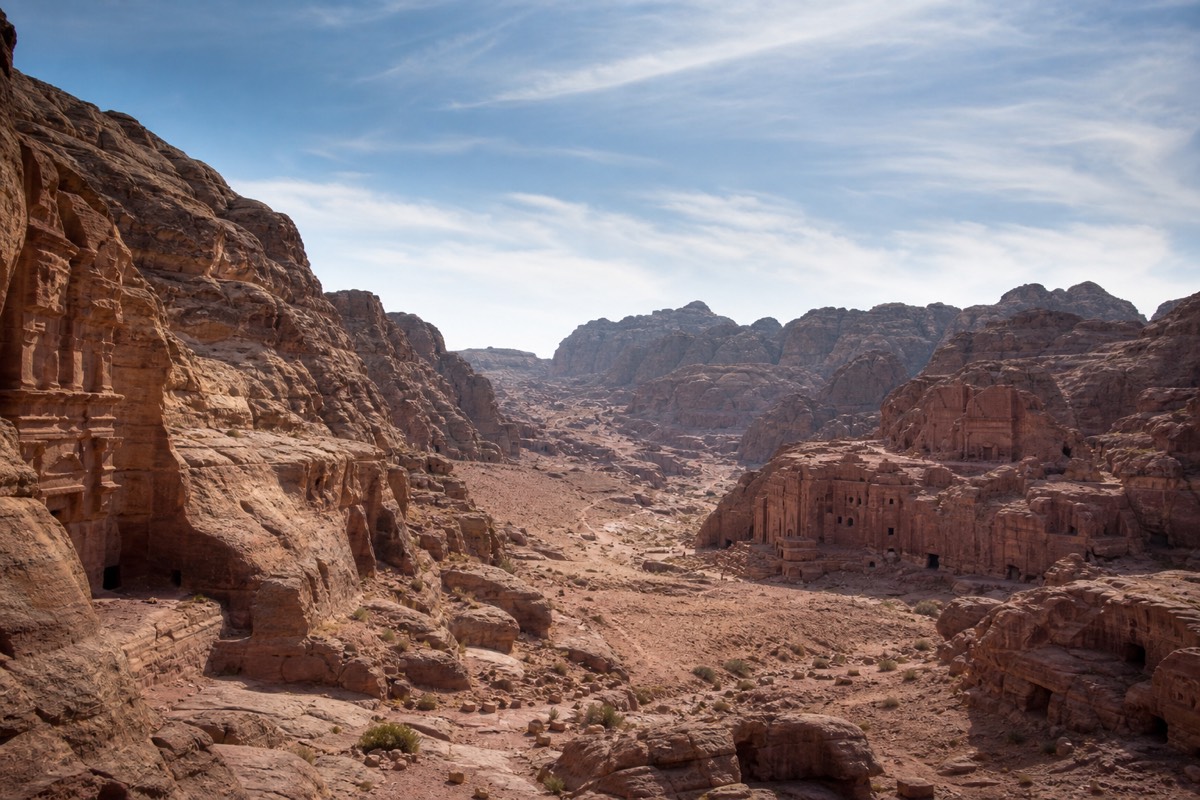
The Jordanian shore of the Dead Sea has both public beaches and resort beach access, each with fresh-water shower stations and, at the resorts, changing rooms and food on site. Every one of the site's multi-day Petra itineraries that includes the Dead Sea builds in a dedicated block of beach time rather than a rushed stop, generally an hour or two at a resort, which is enough for a proper float, a rinse and some time to dry off before moving on.

Timing matters more than most people expect. Midday sun over open water with no real shade can be intense even by desert standards, so an earlier or later slot in the day, when it is on the itinerary, tends to be more comfortable than a stop scheduled at noon. Bringing sandals for the walk down is worth it too: the shoreline is often crusted with sharp salt formations rather than soft sand.
The float itself is the easy part. It takes about ninety seconds of feeling strange before it starts feeling wonderful, and most people spend the rest of their session laughing about how little effort it takes to stay up. Understanding why it happens is really just a bonus, and so is knowing why the Dead Sea got its name in the first place. If you would rather have the logistics, the timing and the rinse-off station already sorted for you, Petra Jordan Tours lines up the operators who build a proper Dead Sea stop into their Jordan itineraries, so all that's left for you to do is lie back.