
Dead Sea Jordan: Where to Float and What to Know Before You Go
The Dead Sea’s buoyancy makes floating unusually easy, but it does not make entering the water risk-free. Your legs rise toward the surface and salty water can sting cuts. This guide explains the floating experience, practical safety and how to plan a shore visit.
Booking Choice: Private Dead Sea Half-Day Trip takes 5 hours, starting in Amman. Explore This Option
General starting recommendation. Choose the hotel-entry option for beach/pool facilities; lunch and spa treatments depend on option or cost extra.
We may earn a commission when you book through these links.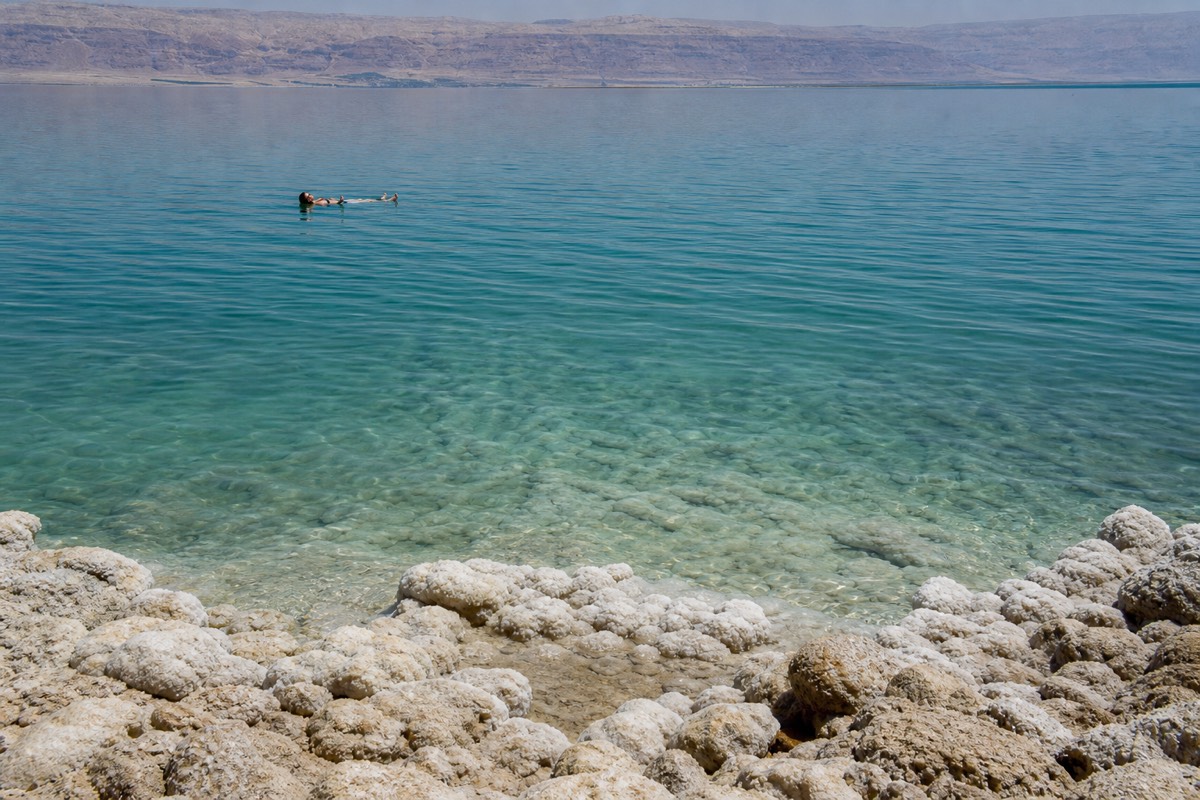
Every guided Jordan itinerary that includes Petra tends to end at the same place: a stretch of shoreline where the water does something your body has never quite felt before. The Dead Sea earns its spot on these trips honestly, not as a filler stop between bigger sights, and the reasons why go well beyond a good photo. Here is what is actually happening in the water, what the current numbers say, and how to do it properly.
What actually happens when you "swim" in the Dead Sea?
The salty water makes floating easier, but it does not prevent drowning. Keep your face out of the water, do not dive or swim face-down, and use supervised, maintained access.
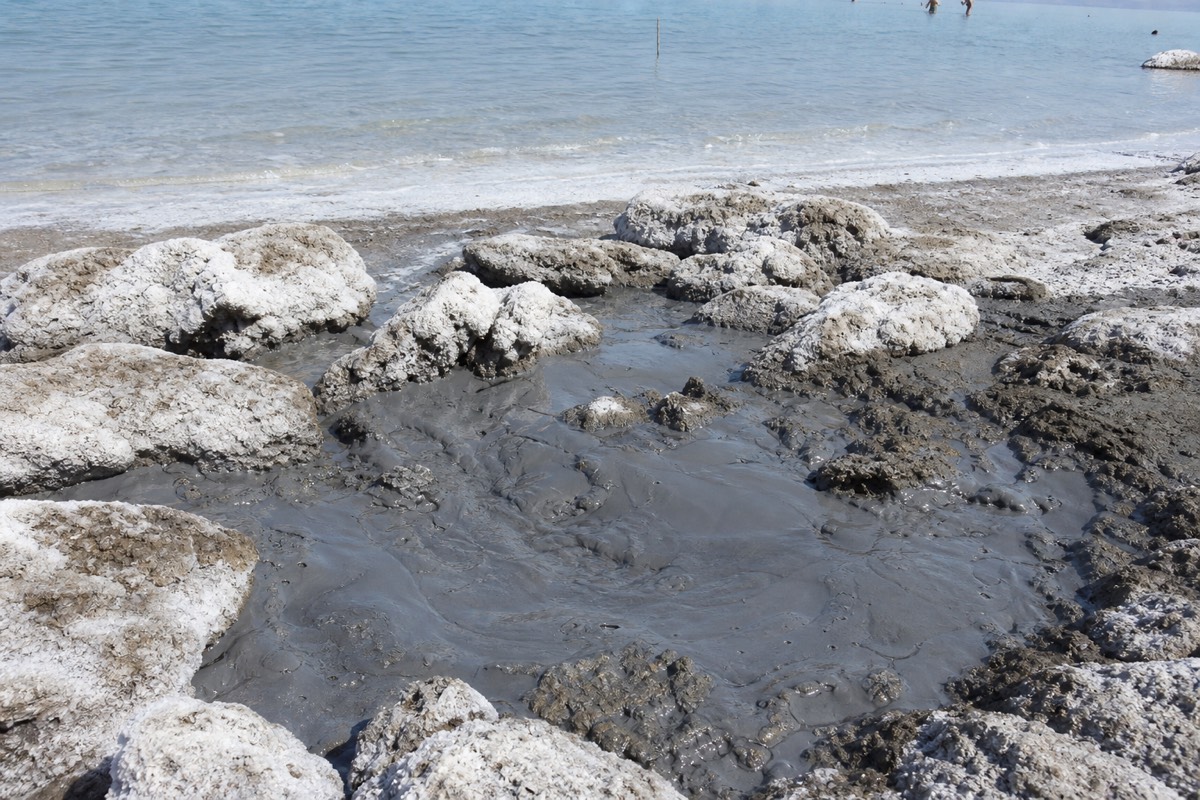
Most people's instinct is to paddle or kick the way they would in a pool, and within seconds they realize none of it is doing anything useful. The water pushes back so hard that lying flat on your back, arms out, feet up, is the only position that actually feels natural. It takes most first-timers a minute or two of fighting the water before they stop trying to swim and just let it hold them.
Why does the Dead Sea make you float instead of swim?
The Dead Sea's water is roughly 24 percent denser than the human body, and because a fluid denser than the object placed in it always pushes that object upward, the buoyant force in the Dead Sea is strong enough to keep a human body on the surface with almost no effort, which is simple physics rather than anything mystical about the water itself.
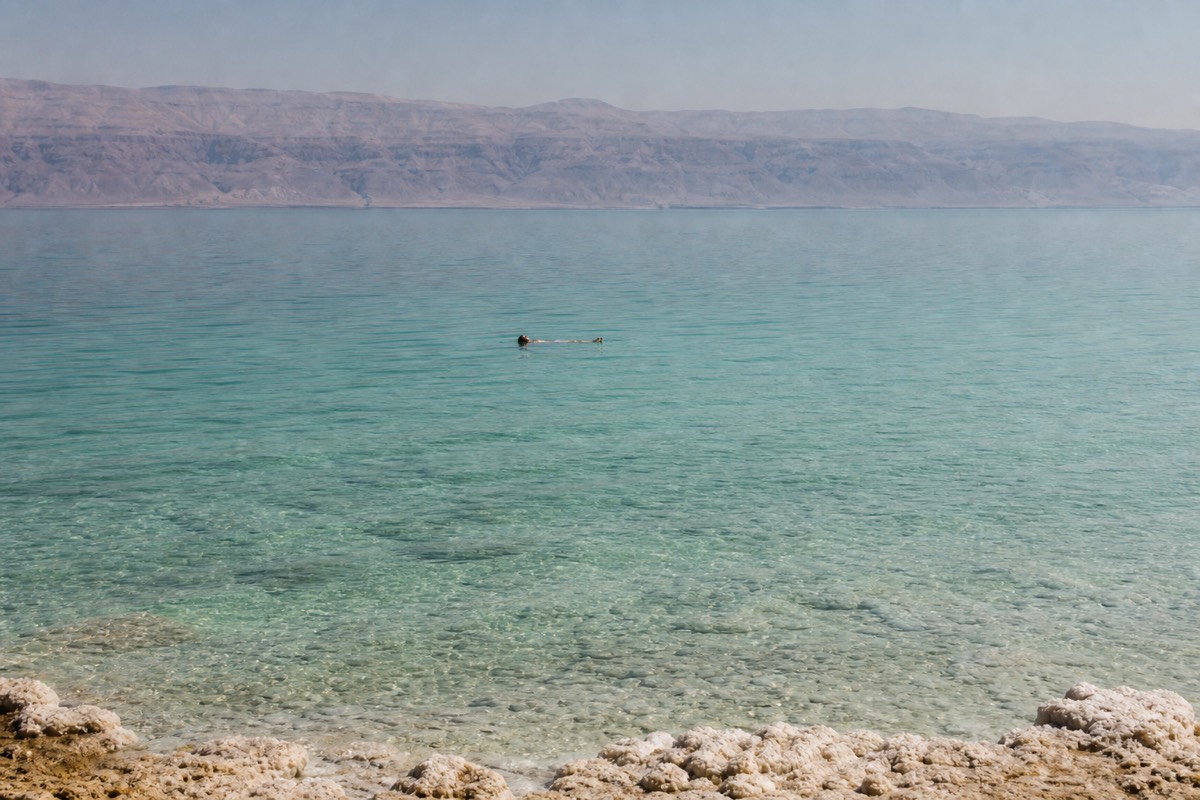
Ordinary seawater has a density close to that of fresh water, about 1 gram per cubic centimeter, and it takes real swimming effort to stay afloat in it. Dead Sea water, loaded with dissolved chloride, magnesium, sodium, calcium and potassium salts, reaches a density of roughly 1.24 grams per cubic centimeter, a gap large enough that the water simply will not let a human body go under. The mechanism is covered well by JSTOR Daily's explainer on Dead Sea buoyancy, which walks through the density math in more detail than most travel guides bother to.
| Water | Approx. density | What it means for you |
|---|---|---|
| Fresh water (pool, lake) | ~1.00 g/cm3 | You have to actively swim to stay up |
| Ordinary seawater | ~1.02-1.03 g/cm3 | Slightly easier to float, still needs effort |
| Dead Sea water | ~1.24 g/cm3 | The salty water makes floating easier, but it does not prevent drowning. Keep your face out of the water, do not dive or swim face-down, and use supervised, maintained access. |
How salty is the Dead Sea, really?
The Dead Sea's salinity sits above 30 percent dissolved salt, commonly cited around 34 percent, which makes it roughly nine to ten times saltier than a typical ocean, and that concentration is exactly what pushes the water's density high enough to force a swimmer to the surface.
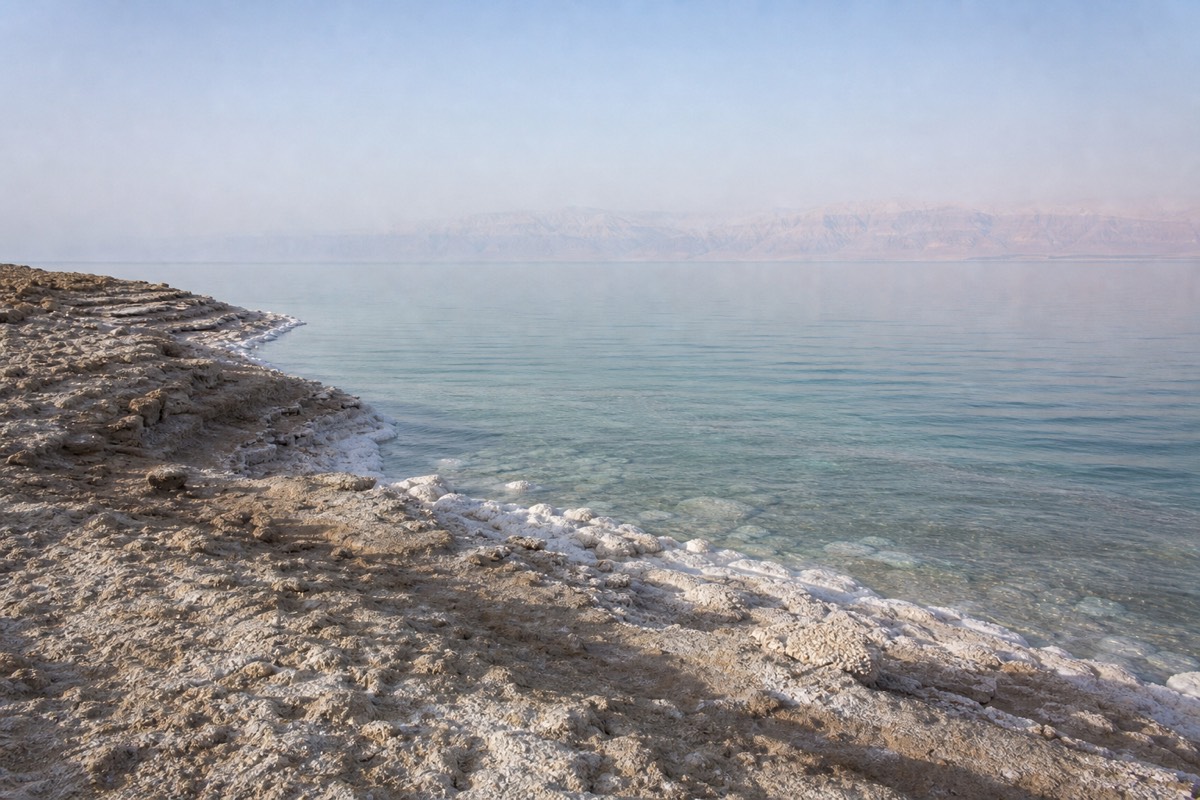
For context, ocean water averages around 3.5 percent salinity. The Dead Sea is not a slightly saltier version of the sea, it is in an entirely different category, closer to a saturated brine than to any other body of water most travelers will ever swim in. NASA's Earth Observatory puts it plainly: the Dead Sea carries "a salt concentration above 30 percent," making it "nearly ten times saltier than the oceans." That salt content is also why nothing lives in it apart from a few resilient microorganisms, which is the origin of the name.
Is the Dead Sea really the lowest point on Earth?
Yes: the Dead Sea's shoreline sits at roughly 430 to 440 meters below sea level, making it the lowest exposed land surface on the planet, and because it keeps losing water faster than it gains it, that number keeps getting lower, dropping by roughly a meter every year.
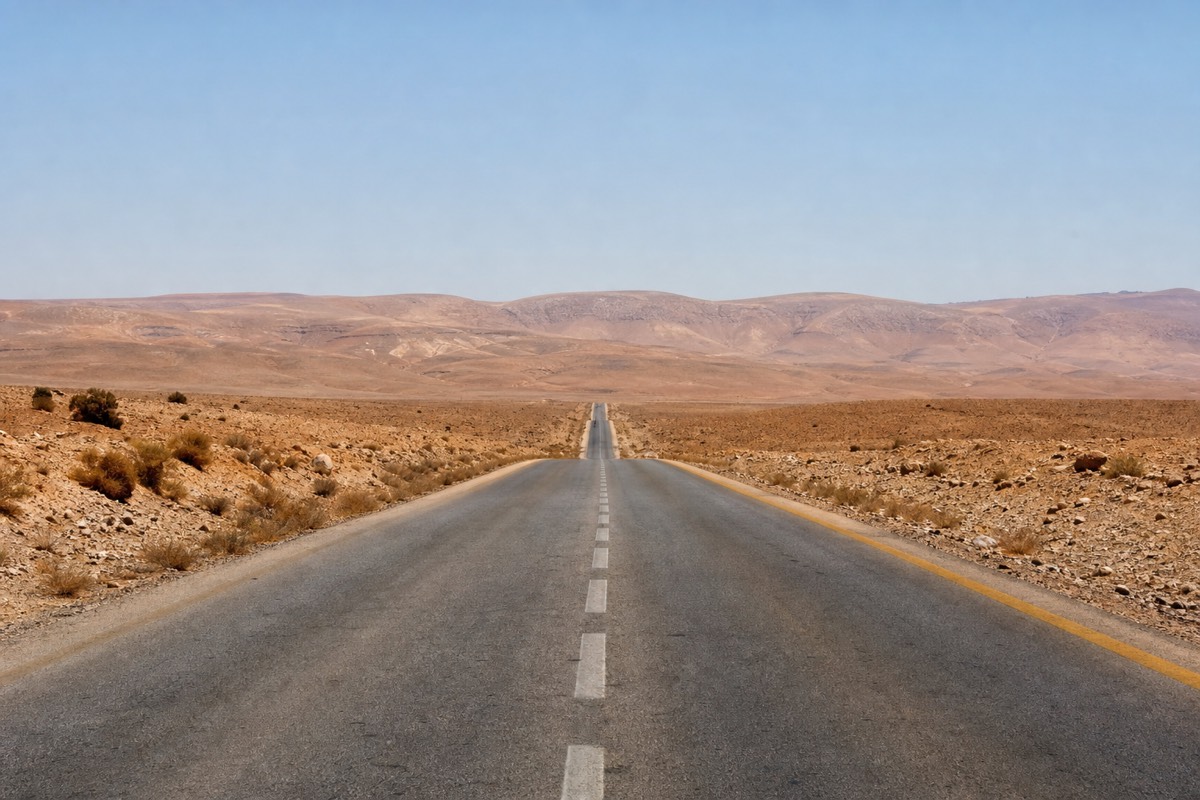
NASA's own figure puts the surface at "around 435 meters" below sea level, while more recent monitoring places it closer to 440 meters as of the mid-2020s, a gap that reflects how quickly the shoreline is actually receding rather than any disagreement about the basic fact. Either figure is more than enough to make the same point: nowhere else on dry land sits this low, and the number is not static.
| Measure | Approx. figure |
|---|---|
| Surface elevation | Roughly 430-440 m below sea level |
| Annual drop in recent years | Roughly 1 m per year |
| Ranking | Lowest exposed land surface on Earth |
Why is the Dead Sea shrinking, and will it still be there when you visit?
The Dead Sea is shrinking because far less fresh water now reaches it from the Jordan River, most of it diverted upstream for agriculture and drinking water, while evaporation in the desert heat continues at the same pace it always has, and the water body has been dropping at an accelerating rate for decades according to the US Geological Survey's monitoring data.
Shoreline conditions and access can change. Use maintained bathing access, follow barriers and local instructions, and confirm that the beach you plan to visit is operating. Do not walk onto unstable shoreline or assume exposed salt formations are safe.
The industry side of the story matters too. A significant share of the water loss is not simple weather, it is deliberate diversion: potash extraction plants on both the Jordanian and Israeli sides pump Dead Sea water into large evaporation ponds to harvest minerals, which speeds up the loss beyond what upstream river diversion alone would cause. None of that is visible from a resort beach, but it explains why the shrinking has accelerated rather than leveled off over the past few decades, even as regional governments have discussed pipeline projects to slow or reverse it.
What should you actually do at the Dead Sea, step by step?
The standard routine is simple: rinse off first, coat yourself in the natural black mud from the shore, let it dry in the sun for ten to fifteen minutes, float on your back for another fifteen to twenty minutes, then rinse the salt and mud off completely at a freshwater shower before it dries on your skin.
The mud is not a gimmick sold at a spa counter; it is genuinely mineral-rich sediment scooped straight from the shoreline, and most resorts and beach access points simply let you take handfuls of it yourself. Floating comes after the mud dries, partly because the salt water rinses it off anyway, and partly because floating first tends to make people want to get out before the mud has had time to work.
| Step | What to do | Why |
|---|---|---|
| 1. Rinse first | Quick freshwater rinse before entering | Removes sunscreen and sweat that can irritate skin faster |
| 2. Apply mud | Coat exposed skin in shoreline mud | Mineral-rich, the classic Dead Sea experience |
| 3. Let it dry | Sit in the sun 10-15 minutes | Gives the minerals time to sit on the skin |
| 4. Float | Lie back, 15-20 minutes max | Longer exposure irritates skin and dehydrates you |
| 5. Rinse off completely | Full freshwater shower after | Dried Dead Sea salt is sharp and irritating on skin |
What are the real safety rules before you get in?
Do not shave for at least 24 hours beforehand, keep your face and eyes out of the water entirely, never float face-down, and cap each float at 15 to 20 minutes, because the same salt concentration that holds you up will find any broken skin, sting badly on contact with eyes, and dehydrate you faster than plain seawater over a longer soak.
These are not exaggerated warnings. A fresh razor nick, a sunburn blister, an insect bite, any break in the skin will sting sharply the moment Dead Sea water touches it, and a splash in the eyes causes real, if temporary, burning. Every resort and public beach on the Jordanian shore keeps freshwater rinse stations right at the waterline for exactly this reason, so use them without hesitation if something stings.
| Rule | Why it matters |
|---|---|
| No shaving 24 hours before | Any nick will sting sharply on contact with the salt |
| Keep face and eyes dry | Salt water causes real burning and temporary blurred vision |
| Never float face-down | Getting the mouth or eyes wet is the main real risk |
| Limit floats to 15-20 minutes | Longer exposure dehydrates skin and body |
| Rinse off fully afterward | Dried salt is sharp and irritating on skin and swimwear |
Where do our tours actually stop at the Dead Sea?
All four of our multi-day Jordan tours include a Dead Sea stop, but the amount of time you actually get there ranges from a two to three-hour beach session to a full overnight stay at a Dead Sea resort, and that difference is worth factoring in before you book if floating is a priority rather than an afterthought.
The 4-day tour is the standout here: instead of treating the Dead Sea as a stop en route, it schedules an overnight stay at the shore itself, which means an evening float, a full night, and time the next morning before continuing, rather than a single afternoon window.
| Tour | Dead Sea time | Format |
|---|---|---|
| Petra, Wadi Rum & Dead Sea 2-Day Adventure | A floating stop on the return leg | Day-use beach access |
| Petra, Wadi Rum Bubble Camp & Dead Sea 2-Day Adventure | 3-hour session | Day-use beach access |
| 3-Day Jordan Highlights Tour | 2-hour session | Day-use beach resort |
| 4-Day Jerash, Petra, Wadi Rum & Dead Sea Tour | A full overnight stay | Resort access, optional 5-star upgrade |
Is a Dead Sea day-stop enough, or is an overnight resort stay worth it?
A two to three-hour day-stop is enough to genuinely experience floating, the mud, and the basic routine, but an overnight resort stay adds an evening and morning float in cooler, quieter conditions plus a proper shower and rest before the next travel day, which matters more to travelers prioritizing comfort than speed.
Neither is the "wrong" choice. A day-stop keeps a 2 or 3-day itinerary tight and efficient, which suits travelers trying to see as much of Jordan as possible in a short window. An overnight stay trades that efficiency for comfort and a second, calmer float outside the midday heat, which is really a decision about pacing rather than about missing anything essential. If you are still weighing itinerary lengths against each other, our comparison of 2, 3 and 4-day Jordan itineraries lays out the full tradeoff.
How far is the Dead Sea from Amman?
The Dead Sea sits roughly 55 to 60 kilometers west of Amman, and the drive down the Dead Sea Highway, officially Route 65, takes about 45 minutes to an hour by car, which is why it works as a single stop on the way back toward the capital rather than a trip requiring its own dedicated day.
That short drive time is a big part of why the Dead Sea sits on every multi-day Jordan itinerary rather than only the longest ones. Compare that to the roughly 2.5 to 3-hour drive from Amman down to Petra, and the Dead Sea reads more like a convenient detour than a separate destination, which is exactly how our tours treat it: a closing stop on the drive back north, not a standalone leg of the trip.
| Route | Distance | Drive time |
|---|---|---|
| Amman to the Dead Sea | ~55-60 km | ~45-60 minutes |
| Amman to Petra | ~240 km | ~2.5-3 hours |
| Petra to the Dead Sea (return leg) | Roughly comparable to the Amman-Petra leg | Several hours, varies by route |
What is Dead Sea mud, actually?
Dead Sea mud is a mineral-rich shoreline sediment made mostly of fine carbonates, clay and quartz, and its distinctive black color comes from poorly crystallized iron sulfides in the mud itself, not from organic decay, which is a common assumption but not what the mineral analysis actually shows.
It is worth separating the geology from the marketing here. The mud genuinely contains measurable concentrations of the same salts and minerals dissolved in the water around it, calcium, magnesium, potassium and iron among them, and it is scooped directly from the natural shoreline rather than manufactured. What it is not is some kind of ancient organic substance; lab analysis has found the organic carbon content is low, around 1 percent, and the dark color traces back to iron sulfide minerals rather than decayed plant matter. That does not make it less worth trying, it just means the honest description is "mineral sediment," not folklore.
| Component | Approx. share |
|---|---|
| Fine carbonates | Over 40% |
| Clay | Up to 20% |
| Quartz | Around 20% |
| Organic carbon | Under 1% |
Can kids and non-swimmers float safely too?
Yes, and in one sense it is easier for them: the same buoyancy that holds an adult up holds a child up just as reliably, so weak swimming ability is not a real barrier, but the same eye and skin cautions apply with even more care, since a child is more likely to rub their face or swallow water by accident.
Close, direct supervision matters more here than swimming skill. A non-swimmer who is nervous in a normal pool often finds the Dead Sea reassuring once they stop fighting it, because there genuinely is no way to go under without forcing it. Keep young children in arm's reach, keep their faces turned away from splashes, and treat the same 15 to 20-minute limit as the rule for everyone in the water, not just adults.
How does the Dead Sea fit with Petra and Wadi Rum in one trip?
The Dead Sea sits close enough to both Amman and the southern Petra-Wadi Rum route that every one of our multi-day tours treats it as the natural closing stop of a loop rather than a separate trip, usually visited on the return leg after the desert and the ancient city.
That routing is not incidental. It lets a trip end on something physically restful, floating rather than walking, after the more demanding legs of Petra's uneven trails and Wadi Rum's bumpy jeep tracks. If you want the deeper mechanics of the floating itself beyond what is covered here, our piece on whether you can actually swim in the Dead Sea goes further into the science, and why it's called the Dead Sea in the first place covers the naming history. For the desert leg of the same loop, see our guide to what a Wadi Rum jeep tour actually involves.
So how should you plan your Dead Sea stop?
Treat it as a routine, not a swim: rinse, mud, dry, float for fifteen to twenty minutes, then rinse again, and keep your face out of the water the whole time. Whether you get two hours or a full night depends on which of our tours you book, but every version gets you the same water and the same physics. The simplest way to fit it into a real trip without juggling resort logistics yourself is to let a guided itinerary handle the timing, and Petra Jordan Tours lines up the operators who build the Dead Sea into a full Jordan loop, so the floating is the part you actually remember instead of the drive to get there.