
Why Is the Dead Sea Called the Dead Sea?
The name sounds like a figure of speech, but it is a literal description. Almost nothing that swims or grows can survive in water this salty, and that single fact explains both the name and most of the other questions people ask about this lake.
Booking Choice: Private Dead Sea Half-Day Trip takes 5 hours, starting in Amman. Explore This Option
General starting recommendation. Choose the hotel-entry option for beach/pool facilities; lunch and spa treatments depend on option or cost extra.
We may earn a commission when you book through these links.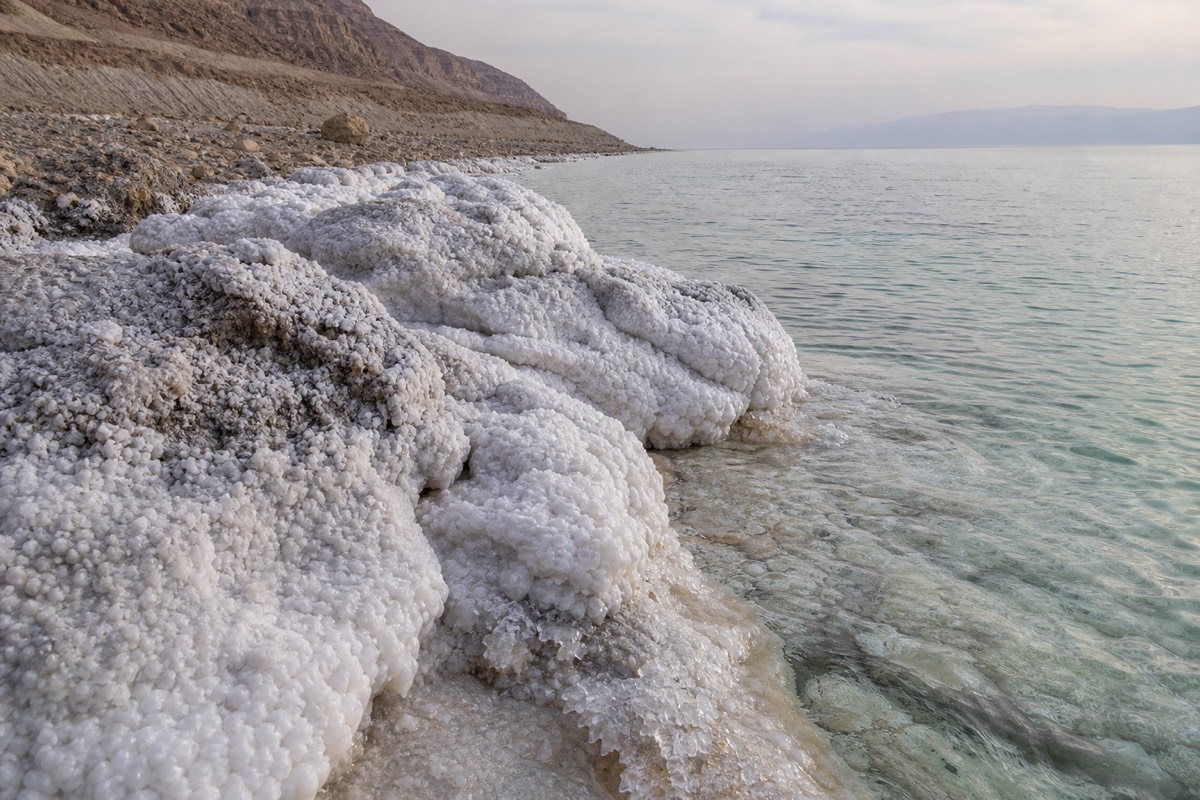
Most place names that sound dramatic turn out to be exaggerations. This one is not. The Dead Sea earned its name from a plain, observable fact: almost nothing that a normal sea or lake supports can live in it.
What does the name actually mean?
The Dead Sea is named for the near-total absence of ordinary aquatic life: no fish, no aquatic plants, none of the visible biology a "sea" implies. The cause is its extreme salinity, roughly 34 percent, about nine to ten times the salt concentration of the open ocean, which is lethal to fish and plants that wash in.
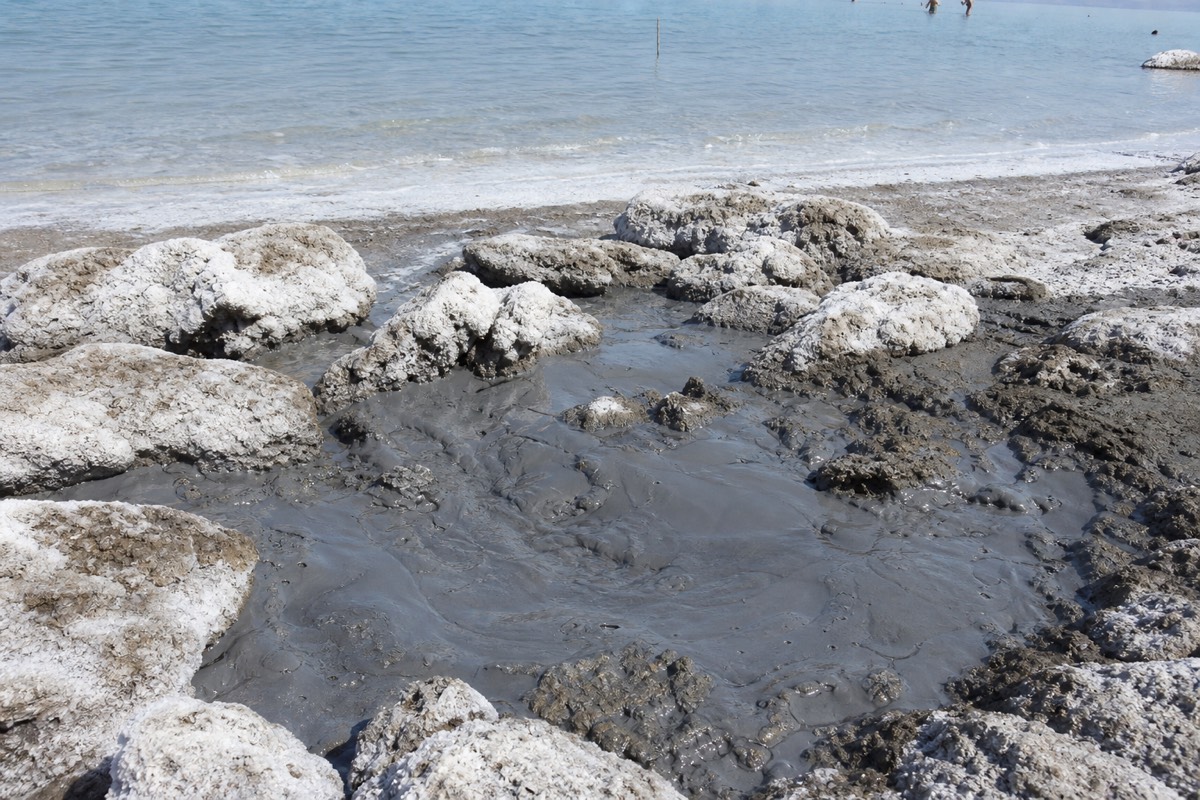
The name is descriptive, not poetic. Greek writers were already using a version of "Dead Sea" (Nekra Thalassa) by the 2nd century CE, according to Wikipedia's account of the lake's naming history, and older Hebrew texts called it the "Sea of Salt" for the same reason. Every culture that named it landed on the same observation from a different angle: this water does not support the life a sea normally does.
Why can't fish and plants survive there?
At roughly 34 percent salinity, the osmotic pressure inside the Dead Sea is far beyond what fish, aquatic plants or amphibians are built to tolerate. Fish carried in by flash floods through seasonal tributary streams typically die within minutes of contact with the water.
Ordinary freshwater and marine organisms rely on a specific balance of salt and water moving across their cell membranes. Dead Sea brine is concentrated enough to pull water out of those cells faster than they can compensate, which is lethal almost immediately rather than something an animal could slowly adapt to. That is also why nothing has ever colonized the lake the way fish colonize a new freshwater lake or a coral reef colonizes a warm coastline: the water itself is the barrier.
| Dead Sea | Typical ocean water | |
|---|---|---|
| Salinity | About 34% | About 3.5% |
| Fish and aquatic plants | Cannot survive | Thrive |
| Named by | Greek writers, by the 2nd century CE ("Nekra Thalassa") | — |
Is the Dead Sea really completely lifeless?
No, and this is the detail most casual explanations skip. Despite the name, salt-loving microbes, halophilic archaea such as Haloferax and Halorubrum, and salt-tolerant bacteria, along with a hardy green alga called Dunaliella, do survive in the Dead Sea. They are built for exactly this kind of environment: some pump excess salt back out of their own cells, others load up on internal solutes to match the pressure of the water around them rather than fight it. So the name is accurate about what a visitor or a fisherman would ever encounter, no fish, no visible plant life, but not literally accurate down to the microbial level. "Dead" describes the absence of ordinary aquatic life, not sterility.
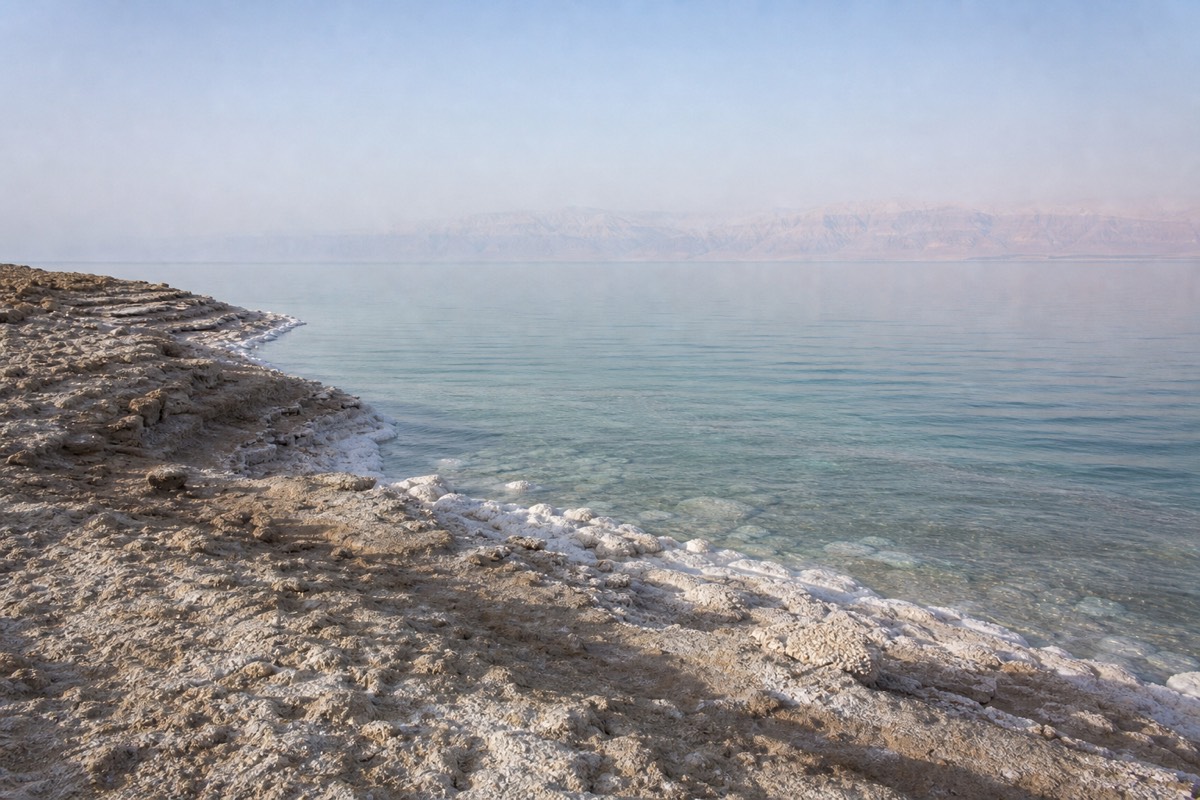
Researchers first began cataloguing these organisms decades ago, and they keep finding more: new strains of halophilic archaea and bacteria have turned up in Dead Sea sediment samples that were not known to survive anywhere else. It is a strange footnote to a name that has stuck around for over two thousand years: the sea that supposedly hosts nothing has quietly turned into one of the more interesting places on Earth to study what "nothing" actually tolerates.
How low is the Dead Sea, and does that matter to the name?
The Dead Sea sits at the lowest point on Earth's land surface. NASA's Earth Observatory puts the depression at about 400 meters (1,300 feet) below sea level, and because the sea has been shrinking for decades, more recent measurements put the current surface closer to 430 meters down, a number that keeps dropping.
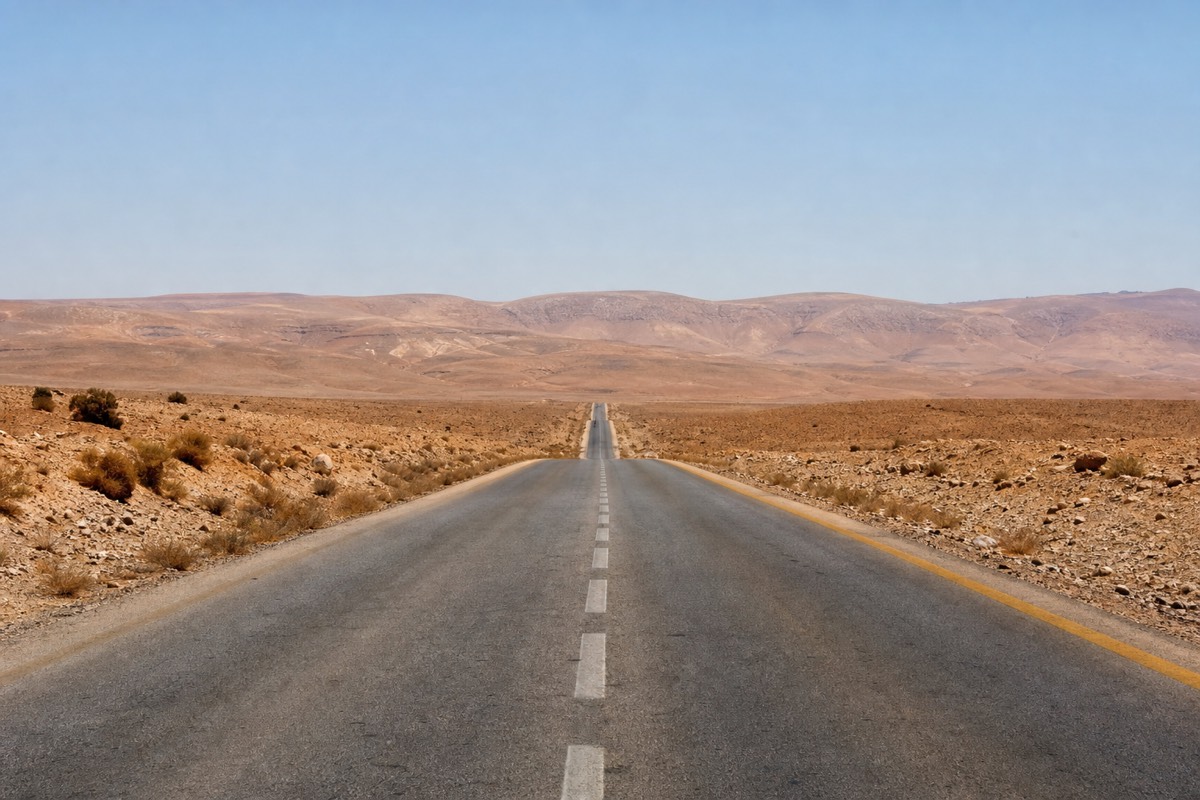
That extreme low point is not a separate fact from the salinity, it is the reason for it. The Dead Sea has no outlet: the Jordan River and smaller streams flow in, and the only way water leaves is evaporation in the desert heat. Every mineral carried in by inflowing water stays behind and concentrates, a process that has been running for thousands of years in a basin that cannot drain any other way. Low elevation, no outlet and a hot climate together are what built a 34 percent brine in the first place, and that brine is what earned the sea its name. The NASA Earth Observatory page on the Dead Sea covers the geography behind this in more detail.
Has the sea always been called this?
Not in every language, though most names point at the same idea from a different angle. Hebrew texts call it the Sea of Salt, the lake's oldest recorded name. Arabic sources call it al-Bahr al-Mayyit, which translates directly as "the Dead Sea," and also Bahr Lut, the "Sea of Lot," after the biblical account associated with the region. Greek geographers writing around the 2nd century CE used Nekra Thalassa, literally Dead Sea, apparently the first recorded use of the name in the form that stuck in English. Different cultures noticed the salt, the lifelessness or the associated scripture first, but they all ended up describing the same lake the same way.
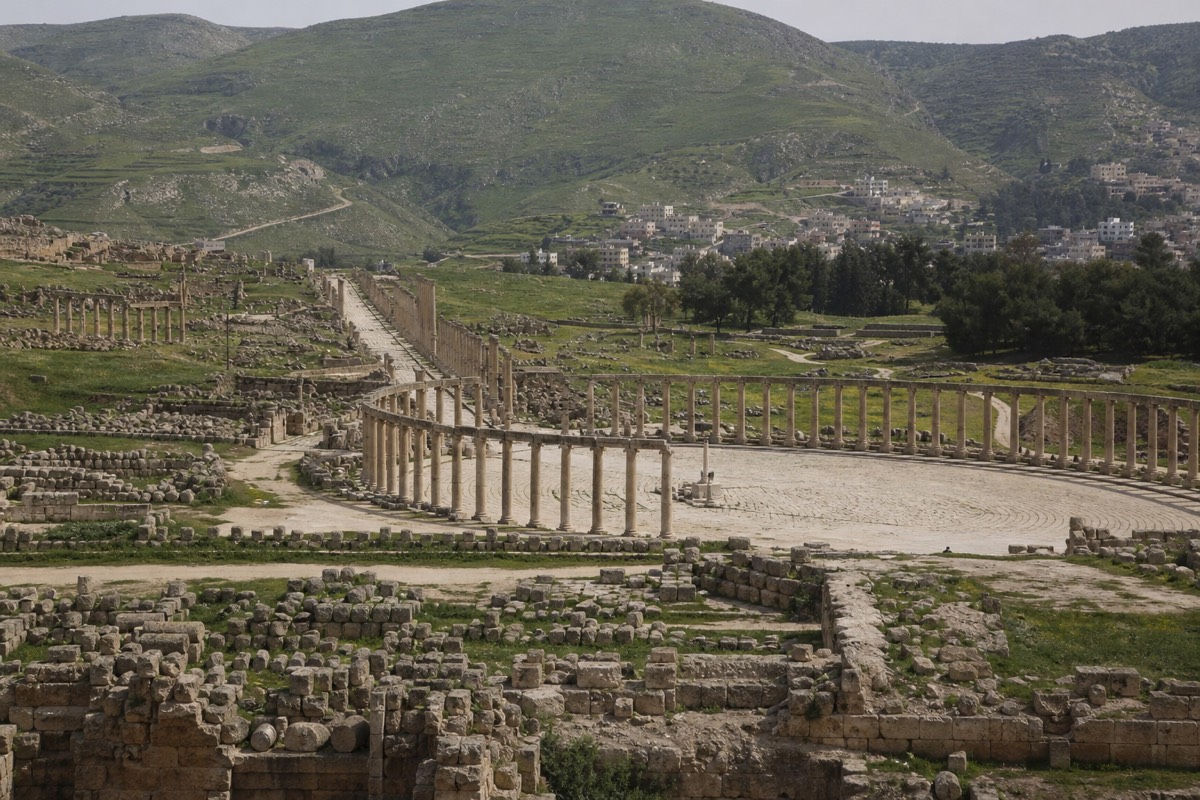
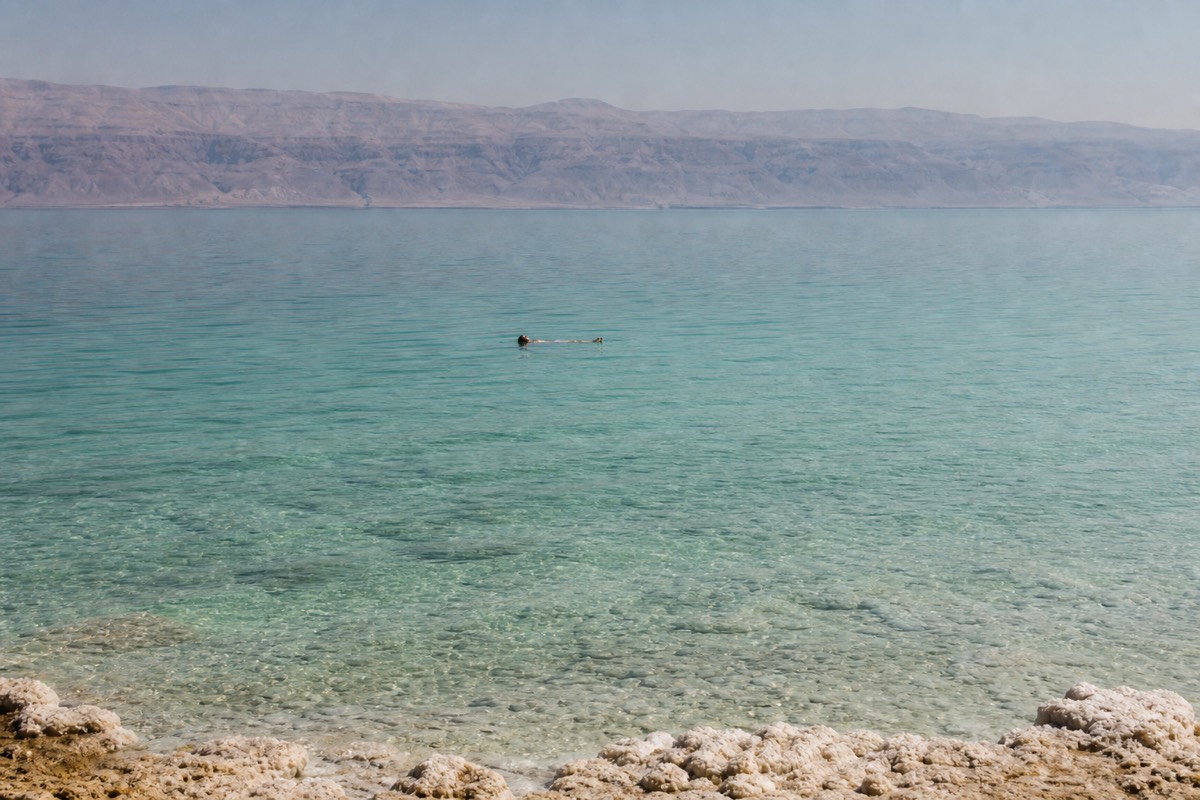
Floating in that same water is the other half of this story, since the density that keeps fish out is the same density that holds a swimmer effortlessly on the surface. The name and the float are really one fact seen from two directions. If you want to feel it for yourself rather than just read about it, Petra Jordan Tours lines up the operators whose Jordan itineraries build in proper time at the shore, so the lowest, saltiest water on Earth is something you experience rather than just a line in an article.