
Wadi Rum Jeep Tour: What Actually Happens (2-Hour vs 4-Hour vs Overnight)
Most people picture a Wadi Rum jeep tour as one long scenic drive. It is really a string of short stops: a pickup truck bed lined with cushions, a Bedouin driver who knows exactly which ridge to climb for the best light, and a route that changes every day depending on who else is out there. This guide breaks down what the 2-hour, 4-hour and overnight versions actually cover, the real history behind the "Valley of the Moon" nickname and the Lawrence of Arabia connection, and which of our tours already build a jeep segment into a longer Jordan loop.
Booking Choice: Wadi Rum Jeep Day And Bedouin Night takes full day + overnight, starting in Wadi Rum. Explore This Option
General starting recommendation. Arrange arrival at Wadi Rum Village. Visitor Centre transfer costs extra. No bubble tent or telescope session promised.
We may earn a commission when you book through these links.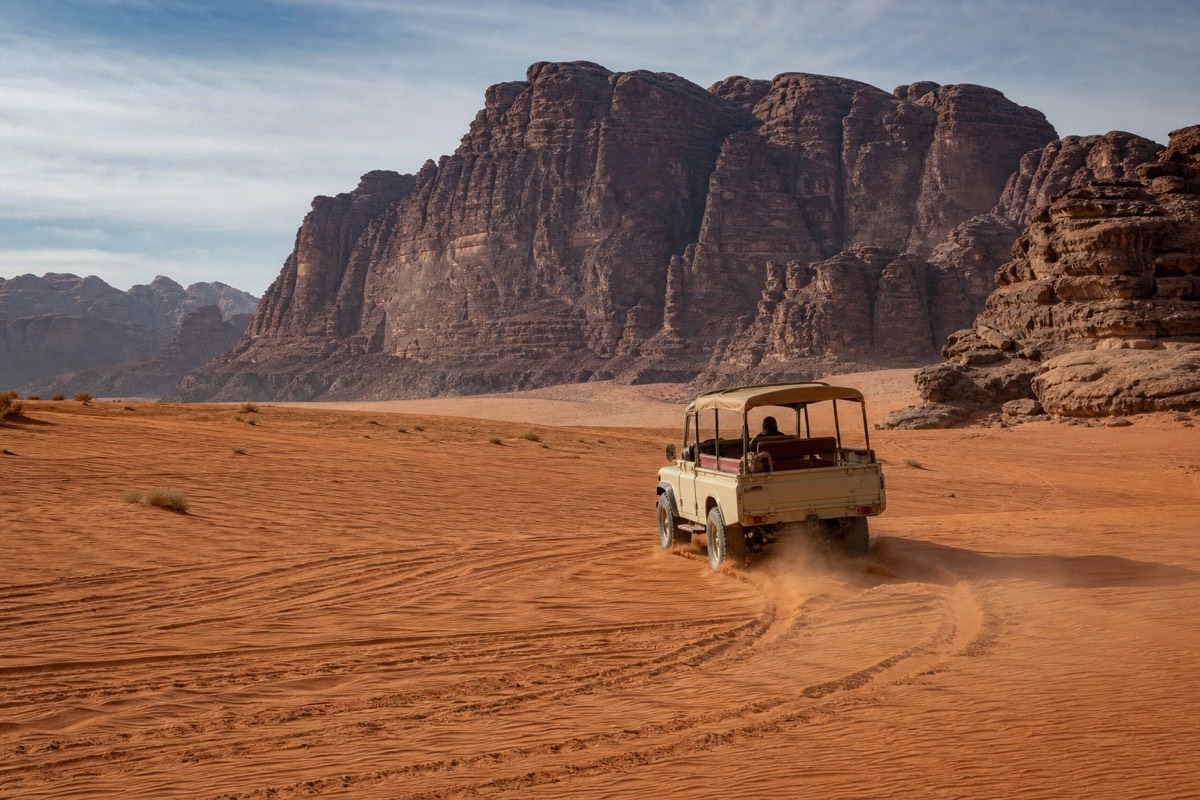
Ask anyone who has done it and the answer is the same: the drive itself is not the point. The point is the stops. A jeep tour in Wadi Rum is built around getting out of the vehicle, standing at the base of a cliff or the top of a dune, and letting the scale of the place register before you climb back in and move on to the next one. Below is what actually happens on one, how the different lengths compare, and the real history behind the names you will hear all day.
What actually happens on a Wadi Rum jeep tour?
A Wadi Rum jeep tour means riding in the open bed of a 4x4 pickup, occasionally an enclosed Land Cruiser for larger groups, across unpaved red sand tracks between a rotating set of canyons, arches and viewpoints, with the vehicle stopping roughly every fifteen to twenty minutes so the group can get out, walk a short distance and take photos.
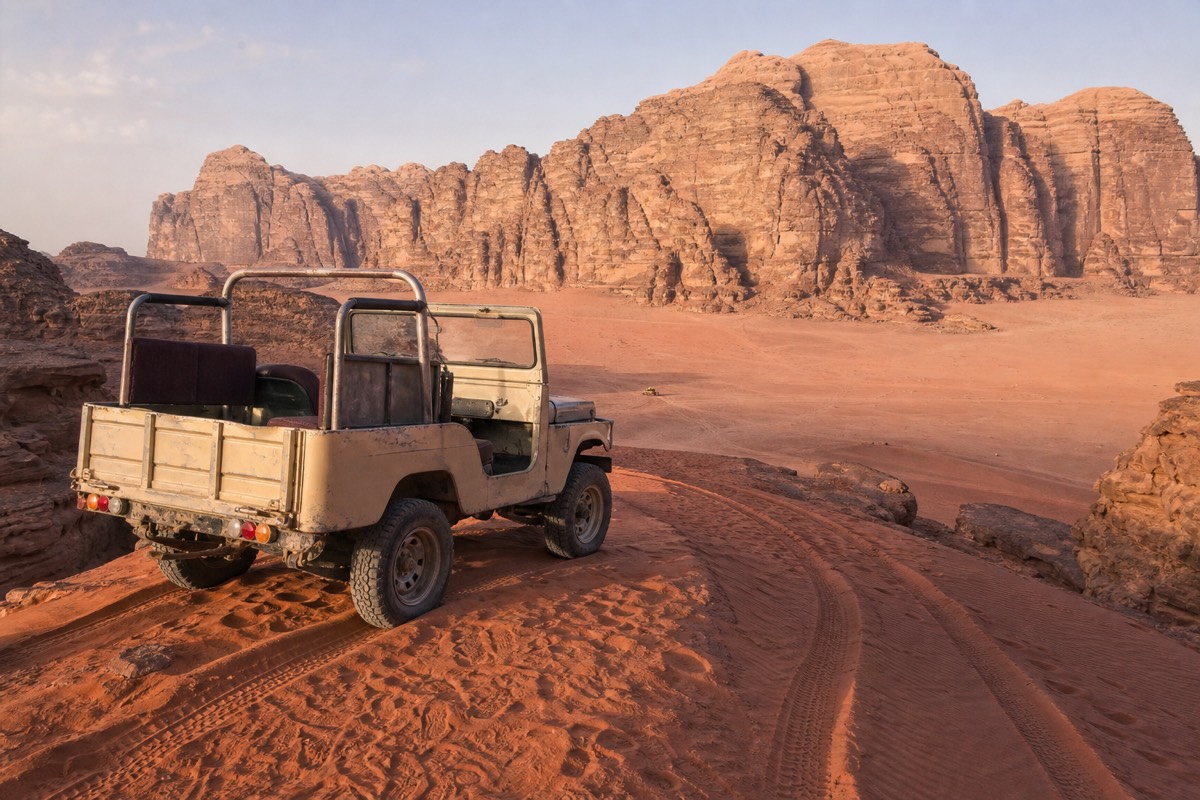
There is no single fixed route. Wadi Rum is a 74,000-hectare protected desert, not a paved park with a one-way loop, so each driver strings together a slightly different chain of stops depending on how long the trip is booked for, how crowded a given canyon looks that morning, and where the light is best at that hour. The drivers are almost always Bedouin, often from families who have lived in and around the valley for generations, and the vehicles are typically shared among 4 to 8 people unless a private jeep is arranged. There are no seatbelts in the truck bed and no fixed stops on a printed itinerary, which is part of what makes it feel different from a bus tour: the guide is reading the group and the day, not following a script.
What are the other ways to see Wadi Rum, and how does a jeep tour compare?
Four realistic ways exist to experience Wadi Rum: a 4x4 jeep tour, a camel trek, a guided hike, and a hot air balloon ride at dawn, and they differ enormously in ground covered, physical effort and what kind of view you actually get.
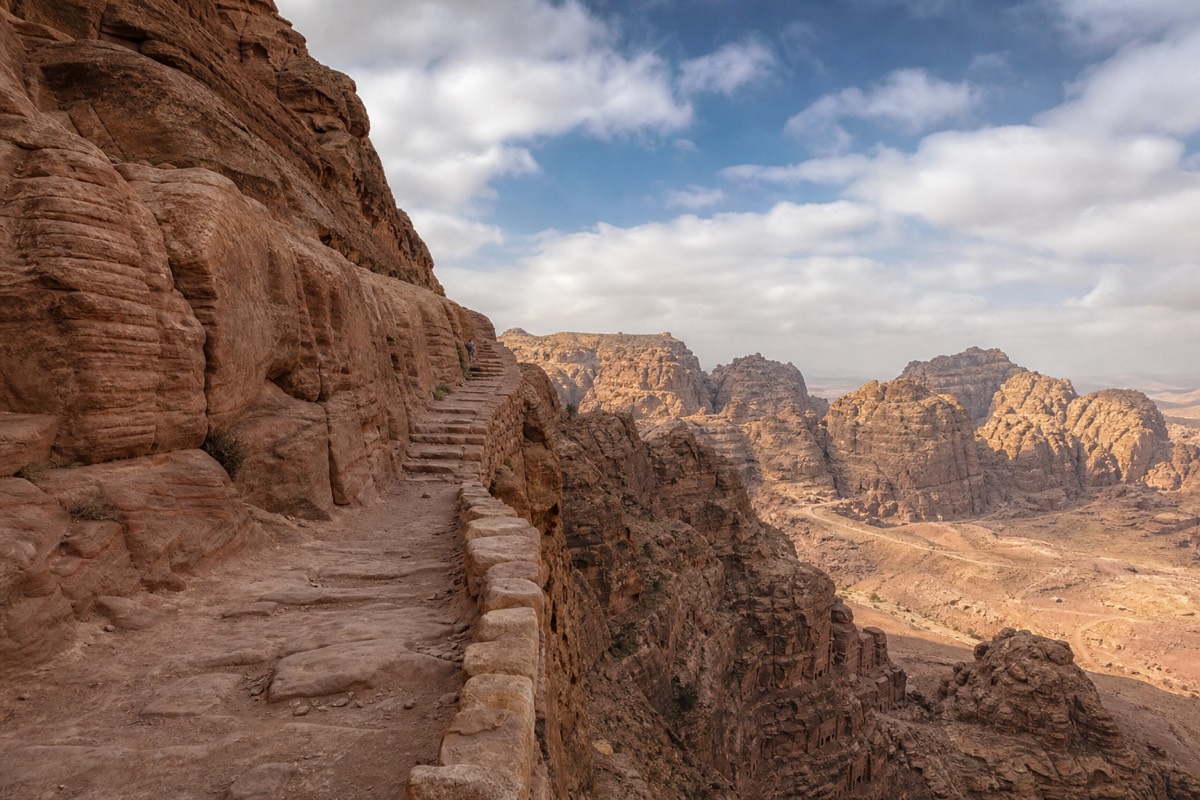
A jeep covers by far the most ground in the least time, which is why it is the default choice on a multi-day itinerary that also has to fit Petra and the Dead Sea. A camel trek moves at walking pace and suits people who want the slow, traditional version of the desert rather than a checklist of landmarks. A guided hike gets you into terrain a vehicle cannot reach, narrow side canyons and scrambles, but demands real fitness and time most day-trippers do not have. A hot air balloon flight, where weather allows, shows the dune and canyon pattern from above in a way none of the ground-based options can. Most travelers on a combined Jordan trip take the jeep simply because it fits the clock.
| Way to see Wadi Rum | Effort | Ground covered | Best for |
|---|---|---|---|
| 4x4 jeep tour | Low, mostly sitting | Highest, dozens of km | Combined itineraries, families, first-timers |
| Camel trek | Low to moderate | Low, short loop | Traditional pace, photography |
| Guided hike | Moderate to high | Low, but off-track | Fit travelers with a full day free |
| Hot air balloon | Very low | Aerial only | Sunrise views, a one-off splurge |
How long should your jeep tour be: two hours, four hours, or overnight?
A 2-hour jeep tour covers a handful of the closest highlights and suits a group already tight on time, a 4-hour tour adds the farther canyons and a proper sunset stop, and an overnight version pairs a longer daytime loop with a night in a desert camp, which is the version that actually lets you see the sky Wadi Rum is famous for.
The length you need depends on what the rest of your day looks like. If Wadi Rum is a stop on a longer Petra-and-Dead-Sea loop, a shorter jeep segment folded into the itinerary is usually the practical choice, since a full 4-hour standalone tour plus an overnight camp adds an extra day most multi-day travelers do not have. If Wadi Rum is the main event, the overnight version is worth the extra planning: the difference between watching the sun drop behind the cliffs from a moving truck and watching it from a camp with nowhere else to be is real.
| Length | Typical stops | Best for | What it usually skips |
|---|---|---|---|
| 2 hours | 3-4 nearby landmarks | A quick taste on a packed itinerary | Farther canyons, sunset timing |
| 4 hours | 6-8 landmarks, sunset | Wadi Rum as the day's main activity | Overnight sky, morning quiet |
| Overnight | Full loop plus camp night | Travelers who want the desert, not just a drive-through | Nothing, but needs a spare night |
What will you actually see on the route?
A typical jeep route strings together a mix of natural rock formations and sites tied to the desert's human history: the Seven Pillars of Wisdom rock face near the entrance, Khazali Canyon with its ancient inscriptions, the Um Fruth rock bridge, a red sand dune for climbing, and a stop connected to T.E. Lawrence.
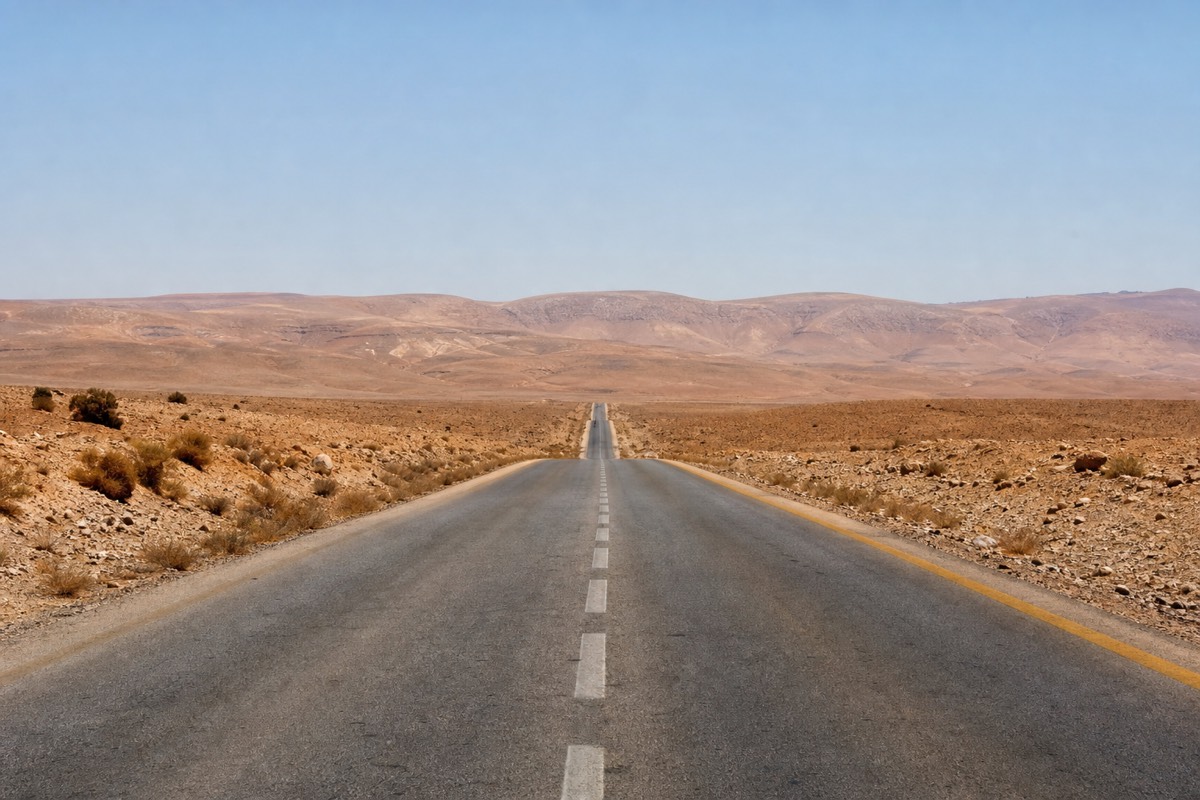
None of these are staged attractions with ticket booths. They are places drivers have been stopping at for decades because the rock formations are genuinely striking and, in a few cases, because they carry Nabataean or early Islamic inscriptions carved directly into the stone. Khazali Canyon in particular is worth slowing down for: it is a narrow slot canyon you can walk into on foot, with faint petroglyphs and script on the walls left by people who passed through the valley over thousands of years, not decoration added for visitors.
| Stop | What it is | Why it's worth it |
|---|---|---|
| Seven Pillars of Wisdom | A ridged rock face near the visitor center, locally called Jabal al-Mazmar | Named after Lawrence's book; the classic first photo |
| Khazali Canyon | A narrow slot canyon with old inscriptions on the walls | Walkable, shaded, genuinely ancient carvings |
| Um Fruth rock bridge | A natural stone arch roughly 20 m above the sand | A short, easy climb for a wide desert view |
| Red sand dune | A steep dune drivers use for a climb-and-slide stop | The classic desert-adventure photo moment |
| Lawrence's Spring | A small natural spring tied to T.E. Lawrence's accounts | The clearest link between the landscape and the history |
Why is Wadi Rum called the "Valley of the Moon"?
Wadi Rum earned the nickname "Valley of the Moon" for the pale, cratered look of its sand basins and the near-total darkness of its night sky, and the area's real significance was formally recognized in 2011, when UNESCO inscribed the Wadi Rum Protected Area as a mixed cultural and natural World Heritage Site.
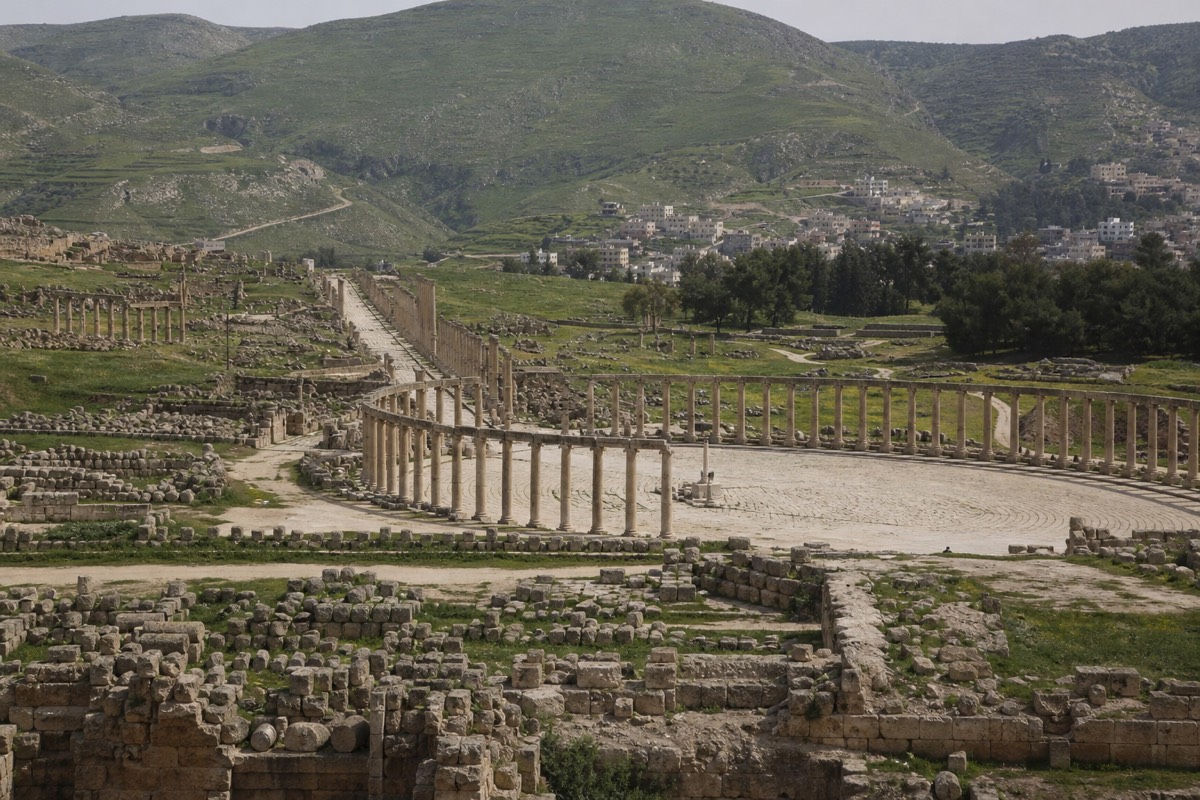
The UNESCO listing covers roughly 74,000 hectares and recognizes two things at once: the sheer geology, narrow gorges, natural arches and towering cliffs shaped by wind and water, and the human record layered on top of it, more than 25,000 rock carvings and 20,000 inscriptions that trace thousands of years of people moving through this exact stretch of desert. The nickname captures the visual side of that; the UNESCO designation confirms the historical side is not exaggerated for tourism, it is a genuinely documented, protected landscape.
Who was T.E. Lawrence, and why is his name on half the map here?
T.E. Lawrence, later known as Lawrence of Arabia, was a British liaison officer who passed through Wadi Rum repeatedly during the Arab Revolt of 1916 to 1918, and several sites drivers stop at today, a spring, a set of ruins, and a rock formation named after his book, carry his name because of that history, not as a marketing add-on.
The rock formation known as the Seven Pillars of Wisdom is named after the title of Lawrence's own memoir of the revolt, and the ruins referred to as "Lawrence's House" sit on the remains of an older Nabataean water cistern he is said to have used during his time in the area, per Jordan's official tourism board. It is worth knowing that the 1962 film named after him, discussed below, only used Wadi Rum for a handful of scenes, so the connection between Lawrence and this specific landscape is a matter of real history, not something invented for the movie.
Has Wadi Rum really been used in the movies you've heard about?
Yes: Wadi Rum's red cliffs have stood in for other planets and deserts in a genuine string of major films, including scenes from the 1962 film Lawrence of Arabia, and later The Martian, Rogue One: A Star Wars Story, and Dune, though several of these productions filmed only part of their footage here and shot the rest elsewhere.
The 1962 Lawrence of Arabia used Wadi Rum for the camp scenes and a well sequence, but the majority of the film was actually shot in Spain and Morocco, where the production built a full-scale replica of Aqaba on a Spanish beach. The more recent films leaned on Wadi Rum harder: production crews on The Martian and Dune used its red sand and rock formations largely as-is to stand in for Mars and the fictional planet Arrakis, needing little more than camera work to sell the illusion. For the full list, release years and which scenes were shot where, our guide to the films shot in Wadi Rum covers it in depth.
| Film | Year | What Wadi Rum stood in for |
|---|---|---|
| Lawrence of Arabia | 1962 | Itself, for camp and well scenes |
| The Martian | 2015 | The surface of Mars |
| Rogue One: A Star Wars Story | 2016 | The moon of Jedha |
| Dune | 2021 | The desert planet Arrakis |
What is it like to sleep over in a Bedouin camp after the jeep tour?
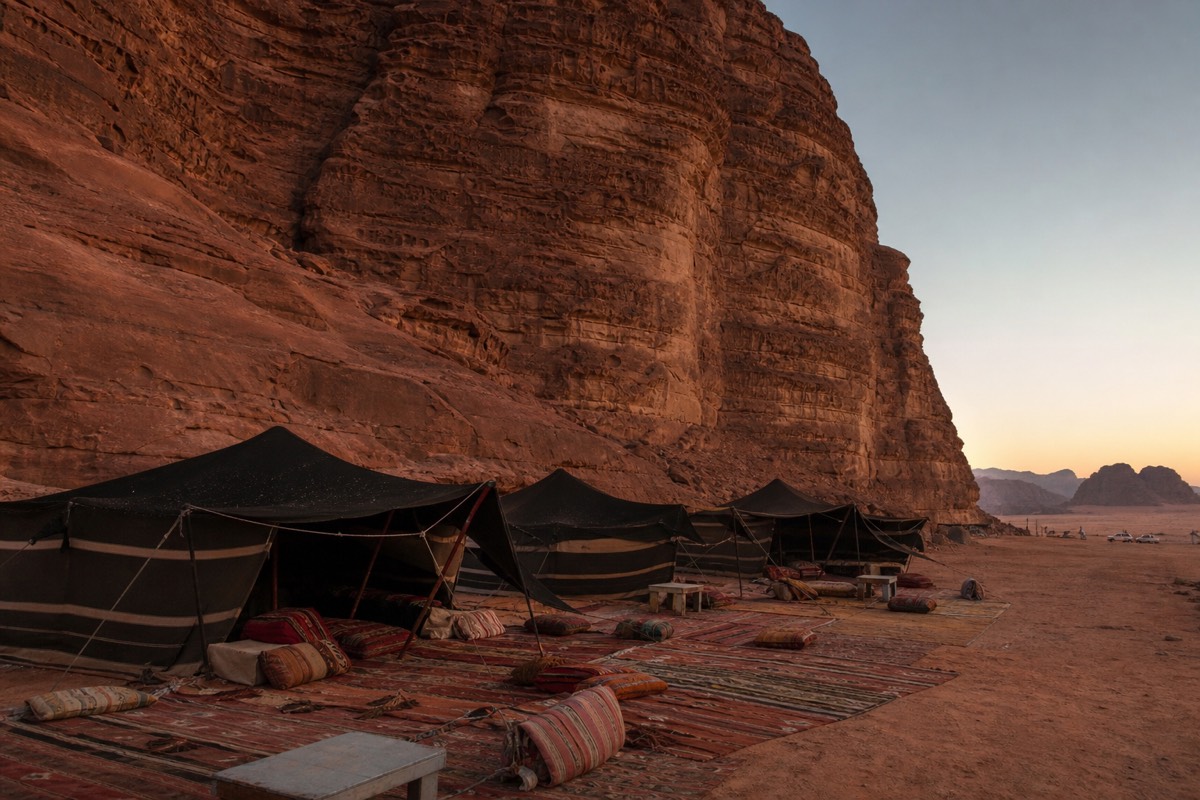
An overnight stop in Wadi Rum usually means either a traditional Bedouin tent camp, woven goat-hair walls, communal dinner, an open fire, or a newer glass-domed "bubble" tent that swaps the communal setup for a private room with a clear roof built specifically for stargazing, and both are genuine, operator-run categories, not gimmicks aimed only at photos.
The traditional camp is the older and more common version: a shared dinner cooked in the sand (often a zarb, meat and vegetables slow-cooked underground), music around a fire, and a night in a canvas tent with the desert cold kept out by blankets rather than heating. The bubble tent is the newer, more private option, a transparent dome that lets you watch the stars from bed without leaving the tent, and it tends to suit couples or travelers who want the view without the shared camp experience. Both put you under one of the darkest skies in Jordan; the difference is mostly about privacy and comfort level, not authenticity. Our guide to the bubble tent camps covers what a night in one is actually like, and if you are still deciding whether an overnight stop is worth building into your trip at all, see is it worth staying overnight in Wadi Rum.
| Camp type | Setup | Best for | Sky view |
|---|---|---|---|
| Traditional Bedouin tent | Shared camp, communal dinner, fire | Groups, families, a social evening | Open-air, walk outside to look up |
| Bubble tent | Private glass-domed room | Couples, travelers wanting privacy | Visible from bed through the dome |
Which of our tours actually include a Wadi Rum jeep tour?
All four of our multi-day Jordan tours that visit Wadi Rum build in a two-hour 4x4 jeep safari as part of a longer loop with Petra and the Dead Sea, rather than selling a standalone jeep tour on its own; the jeep segment is one leg of a bigger itinerary, not a separate booking.
That is worth being clear about, because it is easy to assume "jeep tour" means a dedicated half-day trip. On these itineraries it is a two-hour stop threaded into a longer route, followed by either a return to the road or, on three of the four tours, a night in a Bedouin or bubble camp before continuing the loop the next morning.
| Tour | Wadi Rum jeep segment | Overnight camp | Total trip length |
|---|---|---|---|
| Petra, Wadi Rum & Dead Sea 2-Day Adventure | 2-hour 4WD jeep safari | Bedouin camp, 1 night | 48 hours |
| Petra, Wadi Rum Bubble Camp & Dead Sea 2-Day Adventure | 2-hour 4WD jeep safari | Bubble tent, 1 night | 48 hours |
| 3-Day Jordan Highlights Tour | 2-hour Bedouin jeep tour | Bedouin camp, 1 night | 72 hours |
| 4-Day Jerash, Petra, Wadi Rum & Dead Sea Tour | 2-hour Bedouin jeep safari | Deluxe Bedouin tent (optional upgrade), 1 night | 96 hours |
What should you wear and bring on a jeep tour?
Dress for two climates in one day: sun and heat during the drive itself, and a sharp temperature drop once the sun goes down, so layers, closed shoes, sun protection and a light jacket for the evening cover the range better than any single outfit choice.
The truck bed is open on most jeep tours, which means dust, wind and direct sun for hours at a stretch, so sunglasses and a scarf or buff to cover your face in gusty sections make more difference than people expect. Cash in small Jordanian dinar notes is worth carrying too, since Bedouin tea stops and roadside stalls at some landmarks do not take cards. For the wider question of what to wear in Jordan beyond just the desert day, including cultural context, see our separate guide.
| Item | Why |
|---|---|
| 1.5-2 liters of water | No shade for most of the route |
| Closed, comfortable shoes | Sand climbs and short rock scrambles at stops |
| Scarf or buff | Wind and dust in the open truck bed |
| Light jacket or layer | Desert temperature drops fast after sunset |
| Sunglasses and high-SPF sunscreen | Direct sun with almost no cover |
| Small cash (JOD) | Tea stalls and small purchases at stops |
Is a jeep tour physically demanding, and who should think twice?
Most of a jeep tour is spent sitting, so it is not physically demanding in the way a full hiking day is, but the ride itself is genuinely bumpy over unpaved sand and rock tracks, which is a real consideration for pregnant travelers, anyone with a back or neck condition, and people prone to motion sickness.
This is not a theoretical caution. One of our own 2-day tours flags this directly in its own trip notes, stating the itinerary is not recommended for pregnant travelers because of the combination of bumpy 4WD driving and higher-activity walking across the trip as a whole. If that applies to you, it is worth asking about a gentler alternative, such as a shorter, slower-paced jeep route or skipping the dune-climbing stops, before booking rather than after.
How does Wadi Rum fit with the rest of a Jordan trip?
Wadi Rum sits roughly two hours south of Petra by road, which is exactly why it shows up bundled with Petra and the Dead Sea on every multi-day itinerary rather than as a standalone destination; the desert, the ancient city and the mineral sea form a natural loop south from Amman.
If you are still deciding how many days to give the whole trip, our comparison of 2, 3 and 4-day Jordan itineraries lays out what each length actually fits, and if the geography itself is confusing, our piece on how far Petra actually is from Wadi Rum untangles a mix-up a lot of first-time visitors run into. Pairing a Wadi Rum jeep tour with a Dead Sea stop is nearly universal on these trips, and our guide to floating in the Dead Sea covers what that half of the loop actually involves.
So, is a Wadi Rum jeep tour worth building into your trip?
For nearly every itinerary that already includes Petra, yes: the desert offers a completely different landscape from the rock-cut city, the drive is short enough to fold into a multi-day loop without derailing it, and the history behind the names you hear along the way is documented, not invented for tourists. The honest edge case is a traveler with only one day total in Jordan, for whom Petra alone is the better use of the time. For everyone building a 2, 3 or 4-day route, the jeep segment is one of the easiest additions to get right. The simplest way to see it well is to let a guided trip handle the driver, the route and the timing, and Petra Jordan Tours lines up the operators who run these loops, so the canyons and the sky are the parts you actually remember.