
Little Petra (Siq al-Barid): The Free Preview Before Petra
Most visitors who fly into Amman for Petra never hear about Little Petra, which is a shame, because it sits a short drive from the main gate, costs nothing to enter, and shows the same Nabataean stonework at a scale you can take in without a ticket line. This guide covers what Siq al-Barid actually is, why the name means cold canyon, and whether it earns a slot on your itinerary.
Booking Choice: Petra And Little Petra From Amman takes 11–12 hours, starting in Amman. Explore This Option
General starting recommendation. Admission depends on Jordan Pass option; meals extra unless selected. Not a one-hour local Little Petra transfer.
We may earn a commission when you book through these links.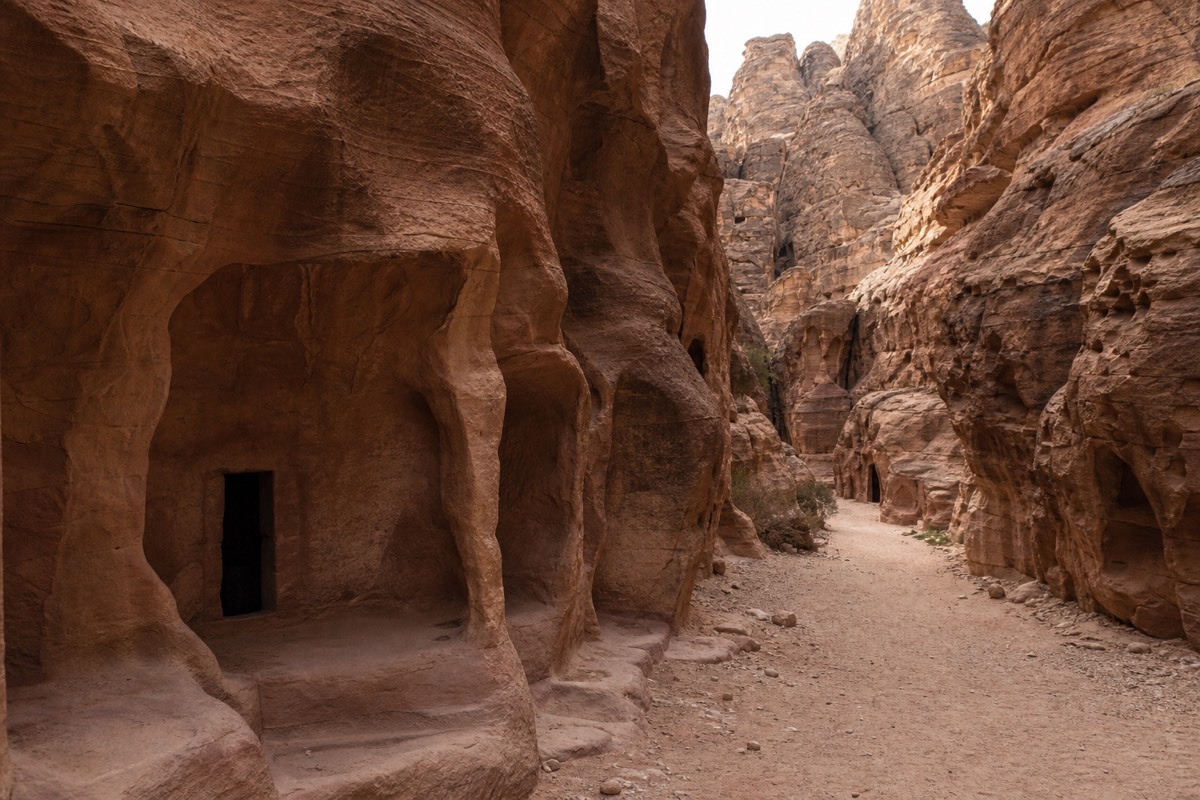
There is a version of Petra that almost nobody photographs, and it is not hidden or hard to reach. It sits about eight kilometers up the road from the main site, has no ticket booth, and most tour buses drive straight past it. Below is what Little Petra actually is, what the Nabataeans built it for, and how to fit it into a trip that is already built around the main event.
What is Little Petra (Siq al-Barid)?
Little Petra, known in Arabic as Siq al-Barid, is a smaller Nabataean site about eight kilometers north of Petra's main entrance. It has carved facades, staircases and water channels that echo the main city on a smaller scale, sits inside the same UNESCO World Heritage boundary, and costs nothing to enter: no ticket, no Jordan Pass, no queue.
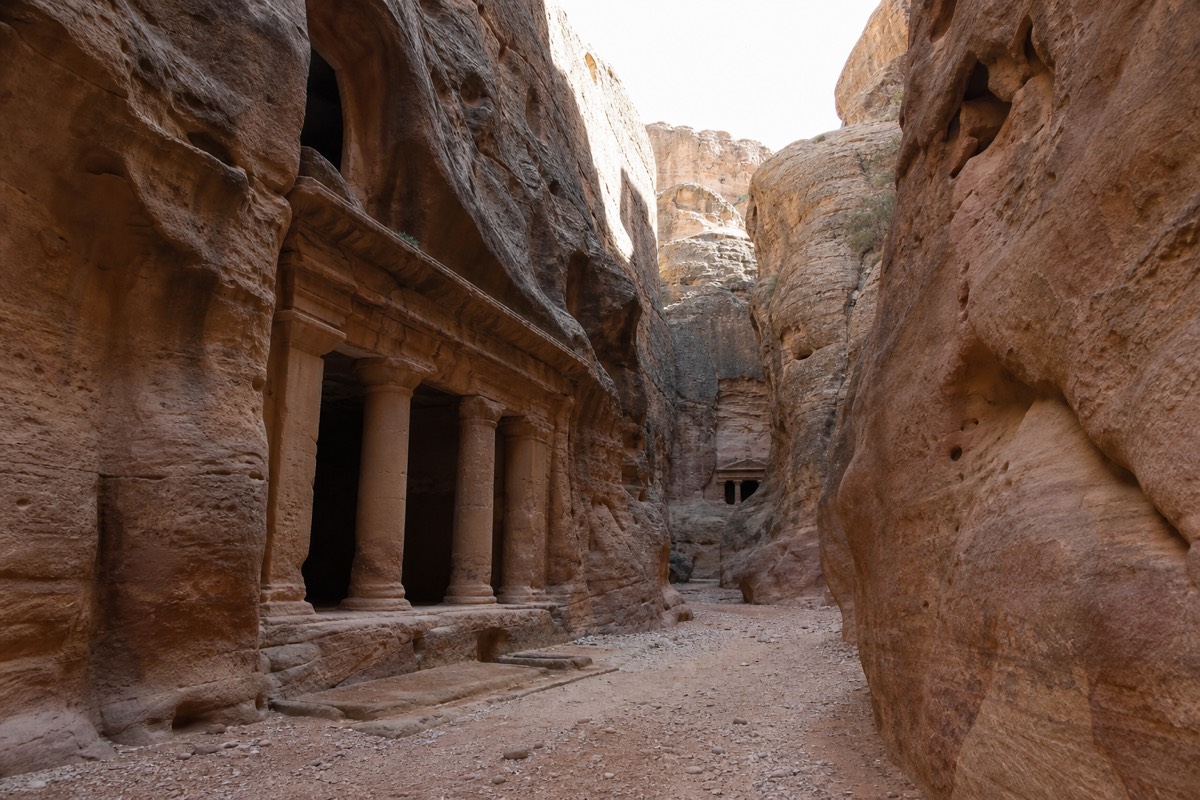
Think of it as Petra's working suburb rather than a miniature copy built for show. The canyon is a fraction of the length of the main Siq, and the crowd that gathers at the Treasury each morning rarely makes the trip out here, which is most of the appeal. You can walk the whole site, read every facade, and be back in your car in under an hour, something that is simply not true of Petra itself.
It is easy to assume a site called "Little Petra" is a theme-park-style scale model, built for visitors rather than found in the ground. It is not. Every carved surface here is genuinely Nabataean, cut into the same rose-colored sandstone as the main city and part of the same archaeological park and UNESCO World Heritage listing, just smaller in scope and, for whatever reason, far less visited. That gap between how significant it is and how few people go is really the whole story of the place.
| Quick facts | Little Petra |
|---|---|
| Arabic name | Siq al-Barid |
| Meaning | "The cold canyon" |
| Distance from Petra | About 8 km (5 mi) north |
| Entry cost | Free, no ticket required |
| Time needed | 30 to 60 minutes |
| Canyon length | About 450 meters |
Why is it called the "Cold Canyon"?
Siq al-Barid translates to "the cold canyon," a name that describes the site rather than the weather. The gorge runs narrow enough and its walls climb high enough that direct sunlight barely reaches the canyon floor, so the air inside stays noticeably cooler than the open desert just outside it, even at midday in summer.
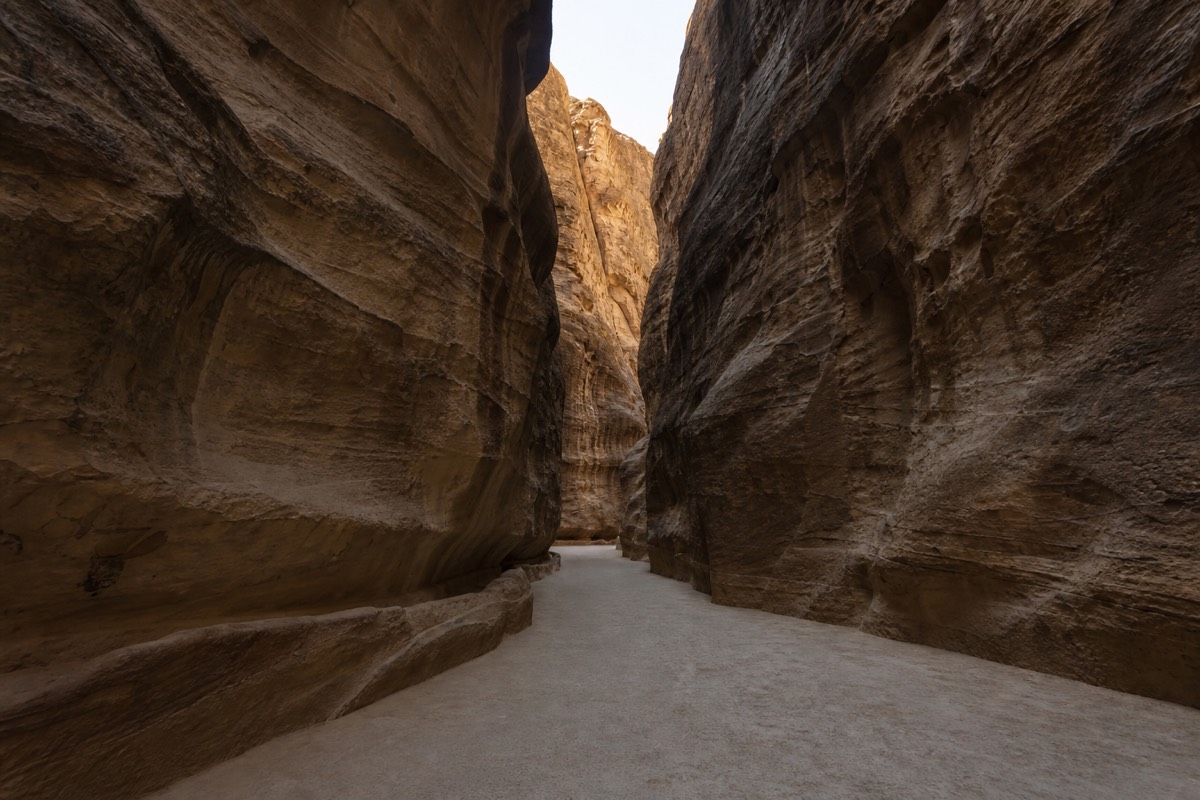
If you have already walked the Siq at Petra, the effect will feel familiar: the same trick of shade and stone, just compressed into a shorter run. Where the Siq stretches 1.2 kilometers between walls up to 80 meters tall, Little Petra's version is smaller in every dimension, but the temperature drop as you step inside is the same kind of relief, which is presumably why the Nabataeans built things this way more than once.
What was Little Petra actually used for?
Archaeologists read Little Petra as a Nabataean suburb built to process trade, not to house royalty. Caravans arriving along the incense and spice routes stopped here first, where merchants were housed, fed and entertained before being escorted the final stretch into the walled capital at Petra itself.
That reading comes largely from what survives inside: not tombs, but dining rooms, cisterns and stairways built for people passing through rather than people staying forever. The best evidence is the site's painted biclinium, a carved dining hall whose ceiling still carries fragments of a Nabataean fresco showing vines, grapes and birds. The paint has been radiocarbon-dated to somewhere between 40 BCE and 25 CE, making it roughly two thousand years old and one of the only surviving examples of Nabataean painting anywhere, according to Wikipedia's summary of the site's archaeology. Nothing else quite like it has been found at the main site.
The name "biclinium" is a giveaway on its own: it describes a room built around two stone couches for reclining diners, a Greco-Roman dining custom the Nabataeans clearly borrowed and carved straight into the rock. Picture merchants who had just crossed weeks of open desert on the incense and spice routes, arriving to find a shaded hall with painted walls and somewhere comfortable to eat before the final short leg into Petra itself. That is the function this whole site seems to have served: not a monument to be admired from a distance, but working infrastructure for a trade network that ran between southern Arabia and the Mediterranean coast, with Petra sitting at its most profitable junction.
| What survives inside | What it tells you |
|---|---|
| The painted biclinium | A rare surviving Nabataean fresco, vines and birds, dated to roughly 40 BCE to 25 CE |
| Carved facade tombs | Smaller versions of the Street of Facades style seen at the main site |
| Staircases cut into rock | Access to upper terraces and viewpoints above the canyon floor |
| Cisterns and channels | The same water-management engineering used throughout Petra |
| Three open courtyards | Wider spaces linked by the narrow canyon, likely used for gathering and trade |
How much does it cost, and do you need a ticket?
Little Petra is free. There is no admission booth, no ticket to buy, and no Jordan Pass coverage required, because none is needed. That makes it one of the only genuinely free major Nabataean sites in the region, a sharp contrast to Petra's own 50 JOD (about $70 USD) single-day entrance fee.
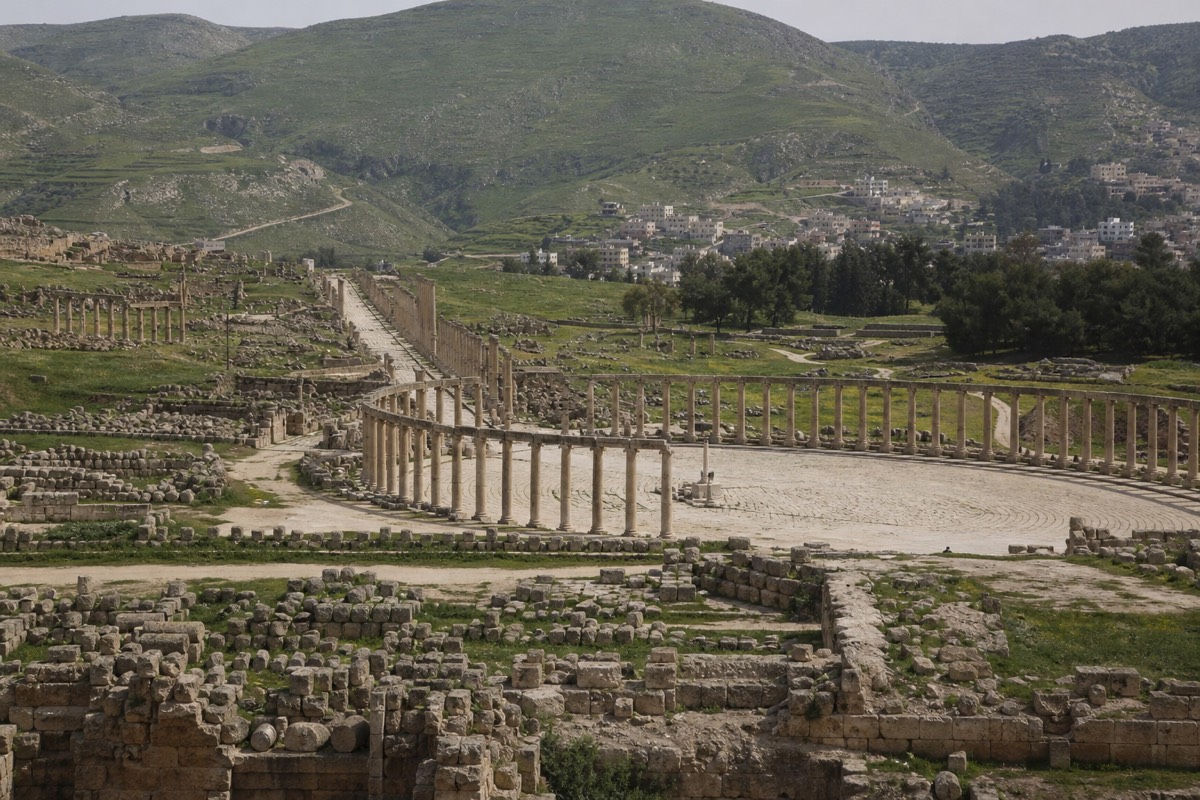
This is worth knowing before you go, because some visitors assume every site near Petra requires the same paperwork and skip Little Petra out of caution rather than disinterest. There is nothing to arrange. You park, you walk in, and the only cost is whatever you choose to spend on a driver or a guide, both of which are optional here.
| Little Petra | Petra | |
|---|---|---|
| Entry fee | Free | 50 JOD (~$70) |
| Ticket required | No | Yes |
| Covered by the Jordan Pass | N/A, already free | Yes |
| Local guide required | No, optional | No, but recommended for context |
How far is Little Petra from Petra, and how do you get there?
Little Petra sits about eight kilometers north of Petra's main gate and the town of Wadi Musa, a drive of roughly 15 to 20 minutes on a paved road. There is no scheduled public bus route, so most visitors reach it by taxi, rental car, or as an add-on stop with a private guide who is already driving them around the area.
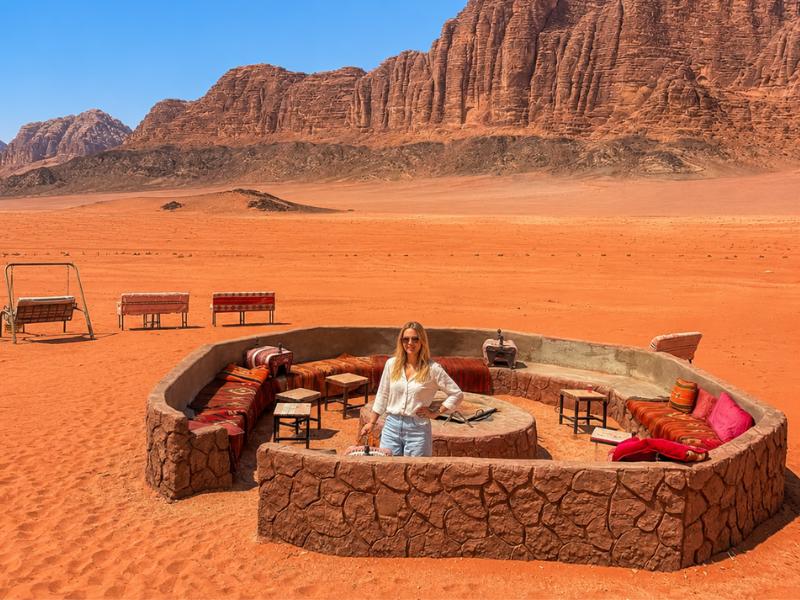
The road out is straightforward and well signed, running through the edge of Wadi Musa and a stretch of open desert before the canyon appears with almost no warning, a low gap in the rock face that could easily be mistaken for nothing in particular. Most Wadi Musa hotels can arrange a driver for the round trip in well under an hour, and it pairs naturally with an early or late slot on the same day you visit the main site.
| Option | Time | Notes |
|---|---|---|
| Taxi from Wadi Musa | ~15 to 20 min each way | Easiest for independent travelers, agree the wait time upfront |
| Rental car | ~15 to 20 min each way | Paved road, simple to self-navigate |
| Add-on with a private guide | Built into the day | No extra logistics, the driver already knows the road |
| Public transit | Not practical | No regular scheduled service to the site |
How long do you actually need to see it?
Most visitors cover the whole of Little Petra, all three courtyards and the connecting canyon, in 30 to 60 minutes. It is self-guided, flat enough for most fitness levels, and small enough that you will not need a map once you are inside.
Because it rarely draws a crowd, you can move at whatever pace suits you without the queueing or jostling that shapes a visit to the Treasury. Bring water and decent shoes anyway; the canyon floor is uneven sand and rock, not pavement, even if the distance is short.
Little Petra vs Petra: how different are they really?
Little Petra is not a substitute for Petra, and nobody who runs a Jordan itinerary should treat it as one. It is a genuine but much smaller Nabataean site: a few hundred meters of canyon and three courtyards, against Petra's sprawling hundred-plus square kilometers of tombs, temples and trails.
Where the comparison actually helps is expectation-setting. If someone in your group has limited stamina for the full Petra day, or if you simply have a spare hour before or after, Little Petra delivers a real, undiluted piece of Nabataean architecture without the walking or the ticket cost. It was never meant to replace the walk through the Siq to the Treasury, only to complement it.
| Little Petra | Petra | |
|---|---|---|
| Approximate size | 450 m canyon, 3 courtyards | 100+ sq km archaeological area |
| Signature feature | The painted biclinium | The Treasury (Al-Khazneh) |
| Time needed | 30 to 60 minutes | Half a day to a full day |
| Crowd level | Light, usually near-empty | Busy from mid-morning |
| Ticket | None | Required, 50 JOD |
Is Little Petra worth the detour, and who should skip it?
For anyone with a spare hour and any interest in Nabataean history, Little Petra is worth the short drive. For a traveler racing the clock on a single-day Amman round trip, it is a fair thing to cut, since the main site alone already fills the available hours comfortably.
The people who get the most out of it are those staying overnight in Wadi Musa or building a multi-day route through the region, where an extra 45 minutes barely registers against the rest of the day. If your visit is built around one long day from the capital, Petra itself should stay the priority, and Little Petra becomes an easy addition only if the schedule has room. Our private guided experience with hotel pickup is based in the Wadi Musa area rather than Amman, which is exactly the kind of schedule that leaves room for it.
There is also a simpler way to think about it: Little Petra costs you nothing but time. There is no ticket to waste and no booking to cancel if plans change, so the honest answer for most people is to plan the main Petra day first, then treat Little Petra as a bonus you add only if the morning or afternoon actually has a gap in it.
Is Beidha, the 10,000-year-old Neolithic village, worth adding too?
Beidha is a Neolithic village site about 800 meters from Little Petra's entrance, inhabited roughly between 8,500 and 5,500 BCE, thousands of years before the Nabataeans carved anything nearby. It is included within the same UNESCO World Heritage designation as Petra, and reconstructed stone houses on site help explain what the excavated foundations actually looked like when they were lived in.
This is one of the more surprising things about the area: the Nabataean carvings that draw people to Petra and Little Petra are, in archaeological terms, relatively recent. Beidha is older by thousands of years, a genuine Stone Age settlement first excavated by Diana Kirkbride in 1957, and it documents the transition from hunting to early farming and settled village life, a shift that happened here as early as almost anywhere on Earth. The circular stone houses gradually gave way to rectangular ones that could be joined together and stacked, an architectural evolution you can trace directly in the ruins and in the full-scale reconstructions built at the entrance.
It rarely appears on a standard Jordan itinerary, which is exactly why it is worth mentioning here: if you have already made the short drive out for Little Petra, walking an extra ten minutes to Beidha adds a completely different kind of history to the same short trip, at no extra ticket cost.
| Beidha, at a glance | |
|---|---|
| Distance from Little Petra | About 800 meters |
| Period | Neolithic, roughly 8,500 to 5,500 BCE |
| Status | Part of Petra's UNESCO World Heritage designation |
| What you'll see | Excavated foundations plus full-scale reconstructed houses |
| Entry cost | Free, same as Little Petra |
What should you bring, and is there anywhere to eat or rest?
Bring water, sun protection and shoes suited to loose sand and rock, the same basics as any Petra-area walk. Little Petra has no formal visitor center of its own, though informal Bedouin-run coffee stalls near the entrance sometimes offer a place to sit down between the canyon and Beidha.
Do not expect the shop, café and restroom facilities you would find at Petra's main Visitor Center; this is a much quieter site with almost none of that built out. That is part of the appeal for some visitors and a reason to plan ahead for others. If a proper break, restroom or meal matters to your schedule, take care of it in Wadi Musa before or after the short drive out, rather than assuming you will find it on site.
What's the best time of day to visit?
Early morning and late afternoon both work well at Little Petra, for different reasons than at the main site. The canyon's natural shade already blocks most direct sun, so heat is less of a factor here, but the light on the carved facades is softest and most photogenic in the first and last couple of hours of the day.
Because it never really gets crowded, timing here is about light and comfort rather than beating a queue. A late-afternoon stop after a full day inside Petra works particularly well: you are already tired from walking, and Little Petra asks very little of you in return.
| Time | Light | Crowd | Temperature |
|---|---|---|---|
| Early morning | Soft, low angle | Near empty | Cool |
| Midday | Flat, harsh outside the canyon | Light | Warm, but shaded inside |
| Late afternoon | Warm, golden on facades | Near empty | Comfortable |
How does Little Petra fit into a Petra itinerary?
Little Petra works best as a bolt-on to a trip that already has some flexibility built in, rather than as a reason to add a whole extra day. It pairs naturally with an overnight stay in Wadi Musa or with any tour based out of the Petra region itself, since the drive is short and requires no separate planning.
A single long day from Amman rarely has the slack for it, since the drive down and back alone takes several hours before Petra is even in view. A private guide already working from a Petra-region hotel, or a multi-day route that includes a night near the site, both leave enough room to add it without disrupting anything else on the schedule.
| Trip type | Room for Little Petra? | Best approach |
|---|---|---|
| Single-day Amman round trip | Tight, optional | Only if the day starts very early |
| Private guided tour based in Petra/Wadi Musa | Comfortable | Add it before or after the main visit |
| Multi-day Petra, Wadi Rum & Dead Sea trip | Comfortable | Slot it into the Petra day or the drive south |
So is Little Petra worth the trip?
For the cost of nothing and the time of an hour, yes. It will never be the reason you fly to Jordan, but as a genuine, uncrowded piece of Nabataean architecture eight kilometers from a site that can feel overwhelming by mid-morning, it earns its place on any itinerary with a little slack in it. Pair it with Beidha if you have the extra ten minutes, and let the main event stay the main event. The simplest way to build a trip that has room for a stop like this is to let a guided route handle the logistics, and Petra Jordan Tours lines up the operators who run these routes, so deciding what to add is the only real work left for you.